


Best Blood Pressure Monitors in the UAE: Which One Should You Buy?
Jun 23, 2026
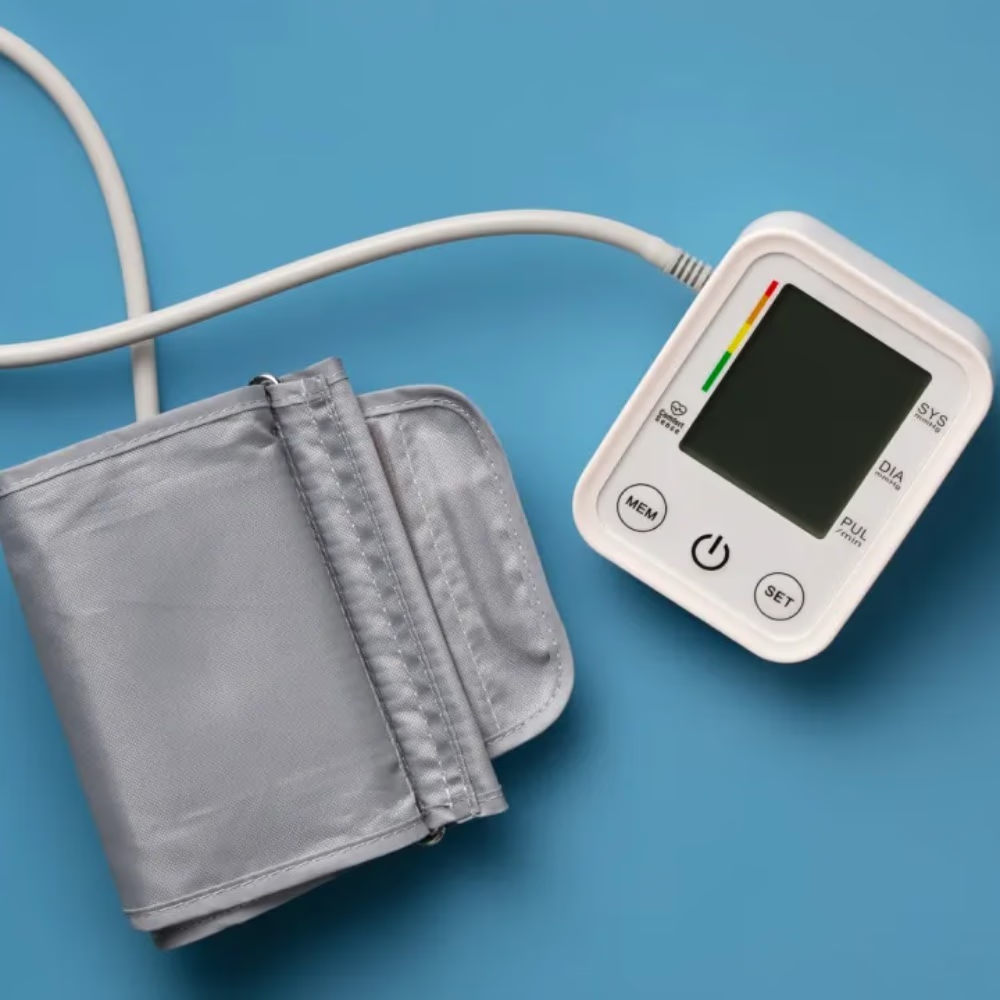
The best home blood pressure monitor for most people is an automatic, upper-arm, cuff-style device that has been clinically validated and fitted with a cuff that matches your arm size. Wrist and finger monitors read less reliably. The brand matters far less than the fit and the validation. If you get those two things right, almost any decent upper-arm monitor will serve you well.
That single answer cuts through most of the confusion. There are dozens of blood pressure monitors on UAE shelves, priced anywhere from around AED 26 to over AED 700, and the listings rarely tell you which one to trust. Below is a pharmacist's view of which type the American Heart Association actually recommends, why cuff fit decides your accuracy more than any feature, and the three monitors worth buying in the UAE. You can also browse MedX's blood pressure monitor range if you want to see the full lineup first.
One thing to set straight from the start. A blood pressure monitor tracks your readings. It does not diagnose or treat high blood pressure. Discuss your numbers with a doctor, and never stop or change any blood pressure medication based on a home reading.
Which type of blood pressure monitor is best?
An automatic, upper-arm, cuff-style monitor is the best type for home use. The American Heart Association recommends upper-arm cuff devices and advises against wrist and finger monitors, because those read less reliably and are more sensitive to body position. A manual monitor with a stethoscope is accurate in trained hands, but for most people at home, the automatic upper-arm option is the right call.
Here is how the three types compare.
Type | Accuracy at home | Ease of use | Best for | AHA stance |
Upper-arm, automatic (oscillometric) | Highest for home use | Easy. One button. | Almost everyone | Recommended |
Wrist, automatic | Lower. Very position-sensitive | Easy but fiddly to position | Only when an arm cuff cannot fit | Not recommended for general use |
Manual, arm cuff + stethoscope (auscultatory) | High, with proper technique | Hard. Needs training | Carers, clinical-accuracy users | Accurate but not for untrained users |
The reasoning is simple. An upper-arm cuff sits at heart level over the brachial artery, which is where blood pressure is meant to be measured. A wrist is further from the heart and tilts easily, so a small change in how you hold your hand can swing the reading. That is why a wrist monitor is a fallback, not a first choice.
What makes a blood pressure monitor accurate?
Two things make a blood pressure monitor accurate: clinical validation and correct cuff fit. Validation means the device has been tested against a reference standard and passed. The American Heart Association points people to validation lists such as validatebp.org and stridebp.org to check. There is one catch worth knowing. FDA clearance is not the same as validated accuracy, so a monitor can be cleared for sale without having passed a validation protocol.
So before you compare features or prices, confirm two things. First, that the model appears on a recognised validation list. Second, that it comes with a cuff that fits your arm. The second point gets ignored constantly, and it does more damage to a reading than almost anything else.
Why cuff size matters (and how to find yours)
Cuff size is the single biggest accuracy factor you control. A cuff that is too small for your arm can overestimate your systolic reading by close to 20 mmHg, according to a 2023 JAMA Internal Medicine study. That is the difference between a reading that looks normal and one that looks alarming, caused by nothing more than the wrong cuff. The bladder inside the cuff should wrap at least 80% of your arm's circumference.
This matters more than people expect, because more than half of adults with high blood pressure need a large or extra-large cuff, not the standard one that often ships in the box. Measure your upper arm before you buy.
How to measure your arm for a cuff
- Wrap a soft tape measure around the midpoint of your upper arm, halfway between your shoulder and elbow.
- Keep the arm relaxed at your side, not flexed.
- Note the circumference in centimetres, then match it to the band below.
Arm circumference | Cuff size you need |
22 to 32 cm | Standard (medium) |
32 to 42 cm | Large |
42 to 50 cm | Extra-large |
This is exactly why the B.Well PRO-35 with its M-L cuff suits most adults out of the box. The medium-to-large cuff covers a wider range of arm sizes, so you are less likely to be stuck with a cuff that is too tight. If you are unsure of your size, a MedX pharmacist can measure your arm in the store and confirm the fit in a couple of minutes.
Which features actually matter?
A few features genuinely help, and several are just marketing. The ones worth having are irregular-heartbeat detection, multi-user memory, and reading averaging. The rest you can take or leave.
- Irregular-heartbeat detection. Flags an uneven pulse during measurement, which is a useful prompt to mention to your doctor.
- Multi-user memory. Stores readings for two people separately, handy when a couple shares one device.
- Averaging. Takes two or three readings and averages them, which matches how blood pressure should actually be recorded.
- Large, clear display. Worth it for older users, simple as that.
- App and Bluetooth. Nice if you like tracking trends on your phone, but not essential. Plenty of accurate monitors have no app at all.
You can safely skip anything that promises to interpret your readings for you or label them as a diagnosis. That is a doctor's job, not a gadget's. Browse the full feature range across MedX's blood pressure monitor range to compare models side by side.
The best blood pressure monitors to buy in the UAE
Three monitors cover almost every home need in the UAE: one for most people, one for slimmer arms or simpler needs, and one for clinical-accuracy users and carers. Each is an upper-arm device, which keeps you on the type the AHA recommends.
B.Well PRO-35 — best for most adults
The B.Well PRO-35 with its M-L cuff is the one to pick if you want a single safe choice. It is an automatic upper-arm monitor, and the medium-to-large cuff fits the arm sizes most adults fall into, which solves the cuff-fit problem before it starts. For a household where one device has to work for everyone, this is the sensible default.
B.Well PRO-33 — best for slimmer arms or simpler needs
If your arm sits at the slimmer end, or you simply want a no-frills monitor, the simpler PRO-33 is a clean, automatic upper-arm option with a standard cuff. Same trustworthy measurement approach, a touch more straightforward.
Erka manual + stethoscope — best for clinical accuracy and carers
For a carer, a nurse, or anyone who wants the traditional clinical method, an Erka manual monitor with stethoscope gives you the auscultatory approach used in clinics. It needs training to use well, so it is not for a first-time home user, but in trained hands it is highly accurate.
Monitor | Cuff / type | Key strength | Best for |
B.Well PRO-35 | M-L cuff, automatic upper-arm | Fits most arm sizes out of the box | Most adults and shared households |
B.Well PRO-33 | Standard cuff, automatic upper-arm | Simple, no-frills, reliable | Slimmer arms or simpler needs |
Erka manual + stethoscope | Manual, arm cuff + stethoscope | Clinical-grade method | Carers and clinical-accuracy users |
How much does a blood pressure monitor cost in the UAE?
Home blood pressure monitors in the UAE span a wide range, from around AED 26 for basic models to over AED 700 for premium ones, with most reliable automatic upper-arm monitors sitting comfortably in the middle. You do not need the most expensive device to get an accurate reading. A validated mid-range monitor with the right cuff beats a pricey one with the wrong cuff every time.
Prices move, so treat any figure as indicative and check the current price on MedX before you buy. Spend your budget on validation and cuff fit first, and extra features second.
How to use your monitor correctly (and how often)
Sit quietly for five minutes first, keep your back supported and feet flat, rest your arm at heart level, and stay still and silent during the measurement. Take two readings a minute apart and record both, because a single reading on its own can mislead. Many people check in the morning and again in the evening when they are first establishing a baseline.
Technique changes your numbers as much as the device does, so it is worth getting right. For the full step-by-step method, see our guide on how to measure your blood pressure correctly at home.
Have the device checked against a clinic monitor about once a year to confirm it is still accurate. Monitors can drift over time, and an annual check keeps yours honest.
What do the numbers mean?
A blood pressure reading shows two numbers. Systolic is the top number, the pressure when your heart beats. Diastolic is the bottom number, the pressure when your heart rests between beats. Your monitor records these. It does not tell you whether they are healthy for you.
Interpreting what your numbers mean, whether they point to high blood pressure, and what to do about them, is your doctor's job. For a plain-English look at the ranges, see what a normal blood pressure reading looks like by age.
And the rule that matters most: do not stop or change any blood pressure medication based on home readings. Speak to your healthcare professional first.
Frequently asked questions
Which type of blood pressure monitor is best?
An automatic, upper-arm, cuff-style monitor is best for home use. The American Heart Association recommends upper-arm devices and advises against wrist and finger monitors, which read less reliably. Make sure it is clinically validated and fitted with a cuff that matches your arm size.
What is the most accurate BP monitor for home use?
The most accurate home monitor is a clinically validated, automatic upper-arm device with a correctly fitted cuff. Validation and cuff fit matter more than brand or price. Check the model against a list such as validatebp.org, and match the cuff to your arm circumference.
Which blood pressure monitor do cardiologists recommend?
Cardiologists and the American Heart Association point to validated, automatic upper-arm cuff monitors. They favour devices tested against a reference standard over wrist or finger types. The specific brand matters less than choosing a validated upper-arm model with the right cuff size for you.
Are wrist blood pressure monitors ever okay?
A wrist monitor is an option only when an upper-arm cuff cannot fit or is painful. Wrist readings are very position-sensitive, so they are a fallback rather than a first choice. If you must use one, ask a clinician about correct wrist and arm positioning.
How do I know what cuff size I need?
Measure the circumference of your upper arm at its midpoint with a soft tape. A circumference of 22 to 32 cm needs a standard cuff, 32 to 42 cm needs a large cuff, and 42 to 50 cm needs an extra-large cuff. A too-small cuff can overstate your reading.
How much should a blood pressure monitor cost in the UAE?
Home monitors in the UAE range from around AED 26 to over AED 700, with reliable automatic upper-arm models in the middle. You do not need the most expensive one. A validated mid-range monitor with the correct cuff is more accurate than a premium device with the wrong cuff.
How often should I check my blood pressure at home?
When establishing a baseline, many people check in the morning and again in the evening, taking two readings a minute apart each time. Your doctor may advise a specific routine. Record every reading, and discuss the pattern with your healthcare professional rather than reacting to one number.
Does a blood pressure monitor diagnose high blood pressure?
No. A blood pressure monitor tracks your readings, but it does not diagnose or treat high blood pressure. Diagnosis and any treatment decision belong to your doctor. Never stop or change blood pressure medication based on home readings without speaking to your healthcare professional first.
The right blood pressure monitor is not the priciest or the smartest on the shelf. It is an automatic upper-arm device, clinically validated, with a cuff that fits your arm. Get those right and you are set. If you want a single safe pick, the B.Well PRO-35 with its M-L cuff covers most arms, or ask a MedX pharmacist to measure yours and confirm the fit before you buy.
Sorting out other home-health kit too? It is worth reading our guide on choosing a home thermometer and a nebulizer buying guide, which follow the same buy-it-once-and-buy-it-right approach.
all blogs