


Do We Really Understand the Concept of SPF?
Apr 30, 2025
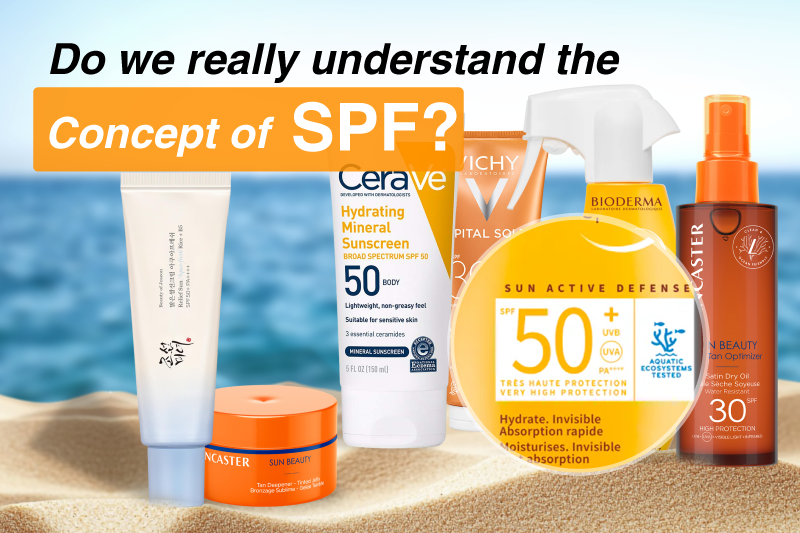
SPF is not only a number mentioned on the sunscreen bottle - it is a shield that protects your skin by running on defense mode the entire day. Whether you have stepped out between meetings for a quick coffee run or are working near a sunny window in the office, your skin is constantly exposed to ultraviolet radiation. And while sunburn seems like an immediate, big concern to many, long-term impacts such as premature aging, pigmentation, and even skin cancer are far more serious issues.
Despite it getting awareness, SPF is still misunderstood as a skincare concept. Many of us apply sunscreen only when we are out in direct sun for too long or during heat waves - ignoring the positives it can bring on a daily basis.
In this article, we are going to several facets of sunscreen - what SPF means? How does SPF work? and Why using the right Sunscreen constantly is often one of the most simple and efficient investments one can make towards their skin’s health.
What is SPF?
The term SPF stands for Sun Protection Factor, but it’s a lot more than technical jargon. It’s a sign of how well the sunscreen can protect the skin from UVB rays emission - the kind of ultraviolet radiation that is a direct-indirect contributor of sunburn and skin cancer.
In order to understand the concept of SPF better, look at it like a time multiplier. For example, if your skin starts giving off that hot, burning sensation when you are out in the sun after 10 minutes, a 30 SPF product would keep you protected 30 times longer - upto 300 minutes - considered you have applied it corrcetly and in huge amounts.
But even then there’s a catch. Most of the people don’t use enough SPF or miss on reapplying, which tend to lower its effectiveness, even in the short run.
It is also important to understand that SPF does not give protection against both UVA and UVB radiation. Although UVB is covered to a great extent, UVA coverage becomes slightly difficult as it tends to penetrate deep inside the skin while causing long-term damage and skin cancer. This is the reason why dermatologists, across the globe, advise using a broad-spectrum SPF which protects against UVB and UVA.
What Does the Different SPF Numbers Mean?
Have you ever looked at the sunscreen section of a skincare eCommerce brand and wondered whether SPF-30 is even sufficient or if SPF-100 would be too much for what you need, well you’re not alone.
Although it’s true that these numbers feel arbitrary, they can actually tell a lot about the product, especially the amount of protection it offers.
Let’s dive deep into it:
- SPF-15 blocks out 93 percent UVB rays
- SPF-30 blocks almost 97 percent
- SPF-50 coverage is around 98 percent
- SPF-100 gives almost 99 percent coverage from UVB emissions.
Now, generally I know we end up thinking that SPF 100 is definitely better than SPF 50, but only when you see numbers like these you realize that the difference between them is only of 1 percent. So after 30, while the numbers are increasing incrementally, they are not infact exponential. But does this mean you should not buy SPF-50 or SPF-100? Also, no. There are some key things that should be considered when investing in a SPF. Let us break it down for youWhich SPF Should I Use? The answer to this varies on the basis of your skin type, lifestyle, and level of sun exposure. Here’s a short guide for you. SPF-15 or less is usually already present in makeup or moisturizers, but when applied on its own, it is rarely that effective, unless you have very less sun exposure or step out for extremely short interval of time. SPF-30 is generally recommemded for every day use, especially when you work near windows, drive, or tend to step out frequently for short intervals. The level is known to offer a strong foundational level protection for almost every skin type and tone. SPF-50+ is best for people who stay in the sun for extended hours, when you work outdoors, spend time at the beach, or sweat during exercises. It is also a safer option if you tend to forget re-applying sunscreen as much as you should. In case you have a history of pigmentation or face issues like rosacea, there is a chance that the dermatologist will suggest 50+ SPF in addition to physical blockers like titanium dioxide and zinc oxide for broad-spectrum yet gentle coverage. Why is Sunscreen a Critical Part of Your Daily Skincare Routine? For a number of us, a good skincare regime usually starts with cleansing, moisturizing, and ends with putting on a serum or two, while sunscreen is more of an outdoor-day-only essential. But the fact is, if you are not putting your sunscreen on everyday, your skincare routine will only do half the job in protecting, strengthening your skin for the long-term. To get a defense shield against a range of issues, which then takes a cocktail of skincare products to solve, sunscreen should be made an unmissable part of your routine. Here are some pointers why: It protects the skin barrier, keeping it strong, healthy, and resilient. It lowers the probability of skin cancer, which includes melanoma that in some instances, can be life-threatening. Helps lock in the benefit of your skincare routine. All of your skincare products work better when UV stress is eliminated. Bottom line. If you care about the longevity of your skin health, a daily application of at least 30 SPF sunscreen is a no-brainer. It will be the one critical step that every skincare step you take. Debunking Common Sunscreen Myths Despite a large number of awareness campaigns and several dermatologists’ advice, a huge number of people skip using sunscreen because of some stubborn myths. Let’s debunk the most commonly-heard and sadly followed ones. “I don’t need sunscreen, it’s going to rain outside.”Well, UV rays are able to pass through the clouds! So while cloudy days feel like you can take a break from sunscreen, your skin might still feel the hit. “I do work from home, so I am indoors most of the time. I don’t need sunscreen” If you drive, sit near windows, or have a lot of screen time, you are still exposed to UV rays and blue light. Sunscreen application can protect and reverse the effect, easily. “I use 100 SPF sunscreen, I don’t need to re-apply it again and again”Not true. Re-application every 4 hours is still necessary and even more so after an exercise or swimming session. ConclusionNow that we have looked into the concept of SPFs, how they work, and the criticality of sunscreens, I am sure one thing would have been established - sunscreens are not just for summers and outdoors - they are your skin’s daily armor against fast aging, pigmentation, and even cancer. The best part is that the industry has evolved to an extent where it is easy to find a sunscreen base that will perfectly match your skin type and condition, all you have to do is check out our platform and get your daily habit delivered to your doorstep.
all blogs