


GLP-1 Medications for Weight Loss: Types, Benefits, and How They Work
May 28, 2026
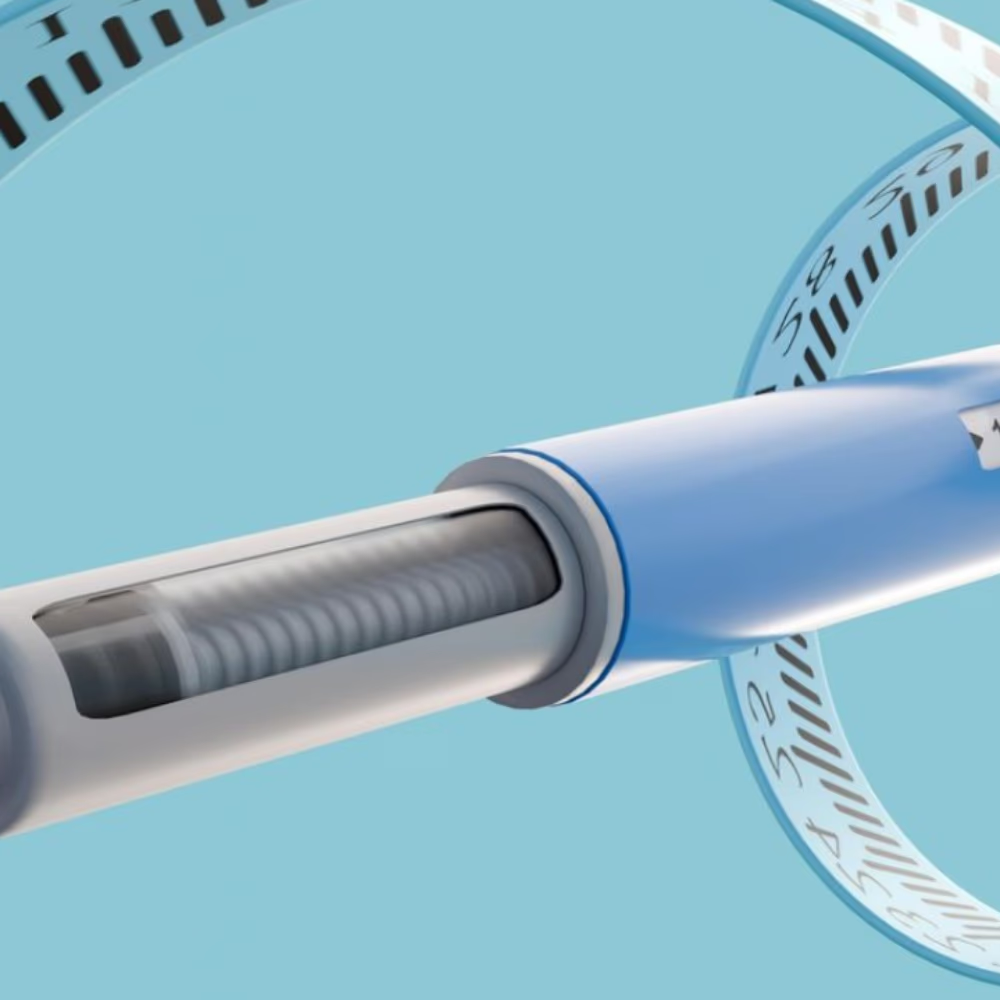
GLP-1 receptor agonists are a class of injectable medications that reduce appetite, slow digestion, and help regulate blood sugar. If you have been researching GLP-1 for weight loss, you have likely come across names like Ozempic, Wegovy, Mounjaro, Zepbound, and Saxenda. Each works through similar biological pathways, but they differ in active ingredients, FDA approvals, and clinical results.
Sorting through so many options can feel overwhelming, and many readers describe the moment they learn about this medication class as genuinely life-changing. That feeling is valid. Based on FDA prescribing information and published clinical trial data, this guide covers how GLP-1 medications work, which types are available, what the research shows, and how to access them in the UAE.
What Are GLP-1 Medications?
GLP-1 receptor agonists are injectable medications that mimic glucagon-like peptide-1, a hormone your gut naturally produces after eating. This hormone plays a key role in how your body manages hunger and blood sugar.
According to FDA prescribing information, GLP-1 medications work through four mechanisms. They enhance glucose-dependent insulin secretion, which helps lower blood sugar. They suppress glucagon release, a hormone that raises blood sugar. They slow gastric emptying, meaning food stays in your stomach longer so you feel full sooner.
Most importantly for weight management, they reduce appetite by acting on brain receptors that regulate hunger signals. Many people describe this effect as the "food noise is gone," referring to the persistent thoughts about food that quiet down on treatment.
Some newer medications in this class, like tirzepatide, target two receptors: GLP-1 and GIP (glucose-dependent insulinotropic polypeptide). This dual action may explain the stronger weight loss results seen in clinical trials.
Types of GLP-1 Weight Loss Injections
Three active ingredients drive the GLP-1 medication class for weight management. Semaglutide targets the GLP-1 receptor and is available as Ozempic (approved for type 2 diabetes) and Wegovy (approved for weight loss). Tirzepatide is a dual GIP/GLP-1 receptor agonist sold as Mounjaro (tirzepatide) (approved for type 2 diabetes) and Zepbound (approved for weight loss). All prescription medications require a valid prescription from a licensed healthcare provider.
Liraglutide, marketed as Saxenda, was the first GLP-1 approved specifically for weight management. You can also review how these medications compare in detail in our GLP-1 medications compared guide.
The table below summarizes each medication, including its active ingredient, mechanism, FDA-approved indication, dosing schedule, and key clinical trial. For full prescribing details, see the Ozempic prescribing information and Mounjaro prescribing information.
Brand | Active Ingredient | Mechanism | FDA-Approved Use | Dosing |
Ozempic | Semaglutide | GLP-1 RA | Type 2 diabetes | Weekly SC injection |
Wegovy | Semaglutide 2.4mg | GLP-1 RA | Chronic weight management | Weekly SC injection |
Mounjaro | Tirzepatide | Dual GIP/GLP-1 RA | Type 2 diabetes | Weekly SC injection |
Zepbound | Tirzepatide | Dual GIP/GLP-1 RA | Chronic weight management + OSA | Weekly SC injection |
Saxenda | Liraglutide 3mg | GLP-1 RA | Chronic weight management | Daily SC injection |
Ozempic (semaglutide) is available on MedX Pharmacy in three dosage strengths: 0.25mg, 0.5mg, and 1mg. All prescription medications require a valid prescription from a licensed healthcare provider.
FDA-Approved vs Off-Label Use for Weight Loss
Understanding the difference between FDA-approved and off-label use is important when evaluating GLP-1 medications for weight loss.
FDA-approved for weight management: Wegovy (semaglutide 2.4mg weekly), Zepbound (tirzepatide), and Saxenda (liraglutide 3mg daily). These medications went through dedicated clinical trials for weight loss and received specific FDA approval for chronic weight management.
Used off-label for weight loss: Ozempic (semaglutide) and Mounjaro (tirzepatide). Both are FDA-approved for type 2 diabetes, not weight loss. When a healthcare provider prescribes them for weight management, this is considered off-label use. Off-label prescribing is legal and common in medical practice, but it means the medication has not been specifically approved by the FDA for that purpose.
The active ingredients in the off-label medications are the same as in their FDA-approved weight loss counterparts. Semaglutide is the active ingredient in both Ozempic and Wegovy. Tirzepatide is the active ingredient in both Mounjaro and Zepbound.
Weight Loss Results from Clinical Trials
In the STEP 1 trial, semaglutide 2.4mg produced 14.9% body weight loss over 68 weeks. The SURMOUNT-1 trial showed tirzepatide 15mg achieved 22.5% body weight loss over 72 weeks. The SCALE trial demonstrated 8% body weight loss with liraglutide 3mg over 56 weeks. All trials required participants to follow reduced-calorie diets with increased physical activity.
For a direct comparison, the SURMOUNT-5 trial evaluated tirzepatide against semaglutide head-to-head. Results showed 20.2% body weight loss with tirzepatide versus 13.7% with semaglutide over 72 weeks. Full trial details are available in the published STEP 1 trial (NEJM).
Many people who have tried these medications report that they "finally something that works" after years of unsuccessful dieting. Community-reported outcomes suggest weight loss of 10-20% over 6-12 months, though individual results vary based on dosage, lifestyle, and starting weight.
Trial | Medication | Weight Loss | Duration |
STEP 1 | Semaglutide 2.4mg | 14.9% body weight | 68 weeks |
SURMOUNT-1 | Tirzepatide 15mg | 22.5% body weight | 72 weeks |
SCALE | Liraglutide 3mg | 8% body weight | 56 weeks |
SURMOUNT-5 | Tirzepatide vs Semaglutide | 20.2% vs 13.7% | 72 weeks |
For a detailed side-by-side breakdown of Ozempic and Mounjaro, see our Ozempic vs Mounjaro comparison guide.
Common Side Effects of GLP-1 Medications
GLP-1 medications share a common side effect profile across the class. According to FDA prescribing information, the most frequently reported side effects include nausea, diarrhea, vomiting, and constipation.
These gastrointestinal effects are dose-dependent, meaning they tend to be more noticeable during dose increases. Most people find that side effects decrease within 4-8 weeks as the body adjusts. Slow titration, where you start at a low dose and increase gradually, is the standard approach to minimize discomfort.
Boxed Warning: All GLP-1 receptor agonists carry a boxed warning regarding thyroid C-cell tumors observed in rodent studies. These medications are contraindicated in patients with a personal or family history of medullary thyroid carcinoma (MTC) or Multiple Endocrine Neoplasia syndrome type 2 (MEN2). Discuss your full medical history with your healthcare provider before starting any GLP-1 medication.
GLP-1s Are Not the Easy Way Out
One of the most persistent myths about GLP-1 medications is that they are "taking the easy way out." The clinical evidence tells a different story.
Every major clinical trial for GLP-1 weight loss medications, including STEP 1, SURMOUNT-1, and SCALE, required participants to follow a reduced-calorie diet and increase their physical activity. The medications were always tested alongside lifestyle changes, never as a replacement for them.
GLP-1 medications address biological mechanisms of appetite regulation that go beyond willpower. They target hormonal pathways that control hunger signals, gastric emptying, and satiety. For many people, these biological factors made sustained weight loss through diet and exercise alone extremely difficult.
How to Access GLP-1 Medications in the UAE
All GLP-1 medications require a valid prescription from a licensed healthcare provider. According to the WHO diabetes fact sheet, diabetes and its complications remain a significant health concern globally, and access to evidence-based medications is an important part of disease management.
MedX Pharmacy, a licensed online pharmacy serving the UAE, currently stocks two GLP-1 medications. Ozempic is available in three dosage strengths: 0.25mg, 0.5mg, and 1mg. Mounjaro is available in five dosage strengths: 2.5mg, 5mg, 7.5mg, 12.5mg, and 15mg. You can browse all available diabetes and weight management medications on the MedX website.
Wegovy, Zepbound, and Saxenda availability in the UAE may vary. Both Ozempic and Mounjaro are used off-label for weight loss; they are not FDA-approved for that purpose. Your healthcare provider can help determine which medication is appropriate for your situation.
Frequently Asked Questions About GLP-1 for Weight Loss
Which is the best GLP-1 injection for weight loss?
There is no single "best" GLP-1 injection for weight loss. In clinical trials, tirzepatide (Mounjaro/Zepbound) produced 22.5% body weight loss in SURMOUNT-1, while semaglutide (Ozempic/Wegovy) produced 14.9% in STEP 1. The right medication depends on your individual health profile, medical history, and your healthcare provider's recommendation.
What weight loss injections are available in the UAE?
MedX Pharmacy stocks Ozempic (0.25mg, 0.5mg, 1mg) and Mounjaro (2.5mg, 5mg, 7.5mg, 12.5mg, 15mg). Both require a valid prescription. Wegovy, Zepbound, and Saxenda availability in the UAE varies. All GLP-1 medications are prescription-only.
Are GLP-1 medications safe for weight loss?
GLP-1 medications have an established safety profile based on large clinical trials. Common side effects include nausea, diarrhea, and vomiting, which are dose-dependent and tend to decrease within 4-8 weeks. All carry a boxed warning about thyroid C-cell tumors observed in rodent studies. Medical supervision is required throughout treatment.
How long does it take to see weight loss on GLP-1 medications?
Most people see measurable weight loss within 4-8 weeks of starting treatment. Average weight loss in the first month is approximately 2-4 kg. Peak weight loss typically occurs at 12-18 months, though results vary based on dosage, lifestyle habits, and starting weight.
What is the difference between GLP-1 and GIP/GLP-1 agonists?
GLP-1 receptor agonists (semaglutide, liraglutide) target one receptor. GIP/GLP-1 dual receptor agonists (tirzepatide) target two receptors, which may explain the greater weight loss observed in clinical trials. For a detailed comparison, see our Ozempic vs Mounjaro guide.
Choose Your Next Step
Understanding the full GLP-1 landscape is the first step toward an informed conversation with your healthcare provider. If you are ready to learn more about specific medications, our detailed guides can help.
Read the complete Mounjaro guide or the complete Ozempic guide for in-depth information on dosing, side effects, and what to expect.
You can also browse Mounjaro products and Ozempic products available through MedX Pharmacy. All prescription medications require a valid prescription from a licensed healthcare provider.
Conclusion
GLP-1 medications represent a clinically studied approach to weight management that works through biological appetite regulation. Semaglutide, tirzepatide, and liraglutide each offer different profiles in terms of mechanism, FDA approvals, and clinical trial results.
The key takeaways: tirzepatide (Mounjaro/Zepbound) showed the highest weight loss in trials at 22.5%, semaglutide (Ozempic/Wegovy) showed 14.9%, and all trials combined medication with lifestyle changes. Ozempic and Mounjaro are used off-label for weight loss, while Wegovy, Zepbound, and Saxenda carry specific FDA approvals for weight management.
If you are exploring GLP-1 for weight loss, start by speaking with a licensed healthcare provider who can evaluate your health profile and recommend the right option. View available GLP-1 medications through MedX Pharmacy, where all orders require a valid prescription.
Medical Disclaimer: This article is for informational purposes only and does not constitute medical advice. Always consult your healthcare provider before starting, stopping, or changing any medication. The information presented is based on publicly available clinical data and prescribing information current at the time of writing. MedX Pharmacy is a licensed pharmacy; all prescription medications require a valid prescription from a licensed healthcare provider.
all blogs