


Glucometer Buying Guide UAE: How to Choose a Blood Glucose Monitor
Jul 20, 2026
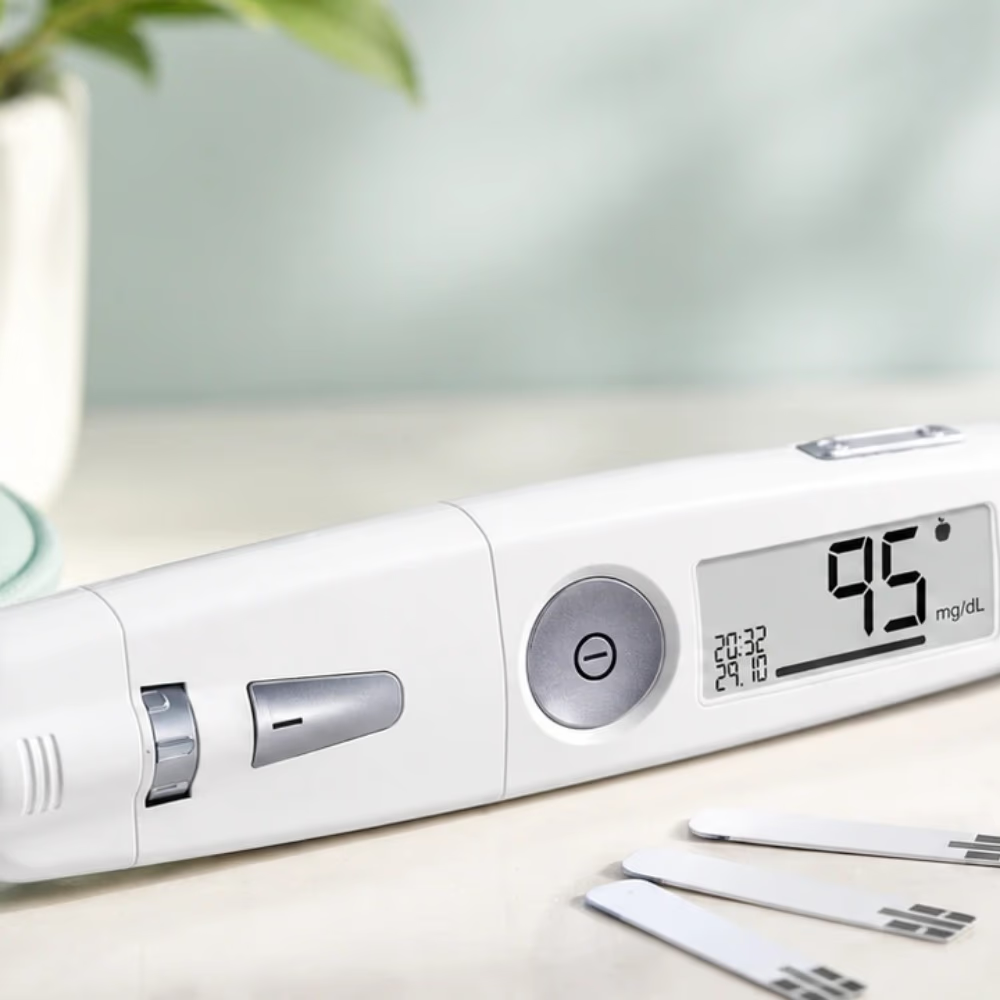
If your doctor has just asked you to start checking your blood sugar at home, that wall of near-identical meters is the first hurdle. Most of them look the same. The differences that matter are the ones you cannot see on the shelf.
A glucometer reads your blood sugar from a small fingertip drop of blood in seconds, and in the UAE you can buy one without a prescription. What separates a good buy from a regretted one comes down to three things. How accurate it is, what the test strips cost you over the years, and how easily it fits your routine. Get those right and the choice makes itself.
What is a glucometer, and do you need a prescription to buy one in the UAE?
A glucometer, or blood glucose meter, is a small medical device that measures the amount of glucose in a drop of blood. You prick a fingertip with a lancet, place the blood on a disposable test strip, and the meter shows your blood sugar level in seconds. It is the standard tool for checking blood sugar at home.
In the UAE, a glucometer is an over-the-counter health device. You do not need a prescription to buy the meter, the strips, or the lancets. You can pick one up in a pharmacy, order it online, or message a pharmacist first if you want a second opinion before you commit.
If you would rather skip the comparison and start with something proven, a ready-to-use starter kit like the Accu-Chek Instant kit puts the meter, strips, and a lancing device in one box, which saves you piecing the parts together yourself. Before you settle on any meter though, it helps to know what actually makes one worth the money. It starts with accuracy.
What actually makes a glucometer accurate?
Home glucometers are held to an international accuracy standard called ISO 15197:2013. It requires that 95% of a meter's readings fall within 15% of a laboratory reference, or within 15 mg/dL for low readings. In plain terms, a compliant home meter gives you a close estimate, not a lab-grade number.
That distinction is worth holding onto. A home meter is built to guide you day to day, not to replace the blood test your clinic runs. If a reading looks far off, wash and dry your hands, use a fresh strip, and test again. Clean technique fixes most strange numbers before they are worth worrying about.
Any meter sold through a licensed UAE pharmacy that meets ISO 15197 has cleared the same bar. So accuracy alone rarely decides it between two reputable meters. The cost of feeding it does.
Why the strips, not the meter, are the real cost
The meter is a one-time purchase. The strips are forever. Each test strip is used once and thrown away, so the true cost of owning a glucometer is the strip you buy every time you test, multiplied by how often you test, for as long as you test.
Here is what that looks like in the UAE. A box of 50 Accu-Chek Instant strips runs around AED 128, which works out to roughly AED 2.5 per test. Test once a day and that is about AED 75 a month. Test twice a day and it is closer to AED 150. Over a year, the strips quietly cost several times more than the meter ever did.
How often you test | Strips per month | Indicative monthly strip cost |
Once a day | About 30 | About AED 75 |
Twice a day | About 60 | About AED 150 |
Four times a day | About 120 | About AED 300 |
Based on roughly AED 2.5 per strip. Prices move, so treat these as a guide and check live pricing on MedX before you budget.
There is a catch that makes this decision stick. Strips are not interchangeable. Each meter reads only its own brand and model of strip, so the meter you buy today decides which strips you are tied to for years. Before you commit, check how available and affordable that meter's strips are locally. For a full breakdown of strip cost per test and which strips fit which meter, our dedicated strip guide covers it in depth.
Which features actually matter?
Once accuracy and strip cost are sorted, a handful of features separate an easy meter from an annoying one. These are the ones worth checking.
- Blood sample size. Measured in microlitres. A smaller sample, around 0.6 microlitre, means a shallower and less painful prick, plus fewer failed tests from too little blood.
- Test time. Most modern meters return a result in about five seconds. Faster is nicer, but any current meter is quick enough.
- No-coding. Older meters made you enter a code with every new strip box. No-coding meters skip that step and remove a common source of error. Buy no-coding.
- Memory and averages. A meter that stores readings and shows 7, 14, 30 and 90-day averages gives you and your doctor a pattern to read, not just today's number.
- Display readability. Large digits and a backlight matter more than they sound, especially if your eyesight is not what it was or you test at night.
- Units. Meters display in mg/dL or mmol/L. Check yours matches the unit your doctor uses, so you are never converting in your head.
- Connectivity. Some meters sync to a phone app over Bluetooth, others plug into a computer by USB. Useful if you like tracking trends, skippable if you prefer a paper logbook.
Accu-Chek Instant vs Beurer GL50: which should you buy?
For a UAE beginner, two meters come up again and again, the Accu-Chek Instant and the Beurer GL50. Both meet ISO 15197, both need only a 0.6 microlitre sample, and both skip coding. Where they differ is how you like to track your readings.
Feature | Accu-Chek Instant | Beurer GL50 |
Accuracy standard | ISO 15197:2013 | ISO 15197:2013 |
Blood sample size | 0.6 microlitre | 0.6 microlitre |
Test time | Result in seconds | About 5 seconds |
Coding | No-coding (automatic) | No-coding |
Memory and averages | 90-day averages, syncs to the mySugr app | Stores up to 480 readings, plus 7, 14, 30 and 90-day averages |
Connectivity | Bluetooth to the mySugr phone app | USB into a computer |
Handy extras | Target-range indicator, strip ejector, wide dosing area | On-meter history without a phone |
Strip availability in UAE | Widely stocked | Stocked, check local availability |
Indicative price | Check current price on MedX | Check current price on MedX |
Pick the Accu-Chek Instant if you want the more widely stocked strips in the UAE and a target-range indicator that shows, at a glance, whether a reading falls inside or outside a band you have set up with your doctor. Its strips are almost everywhere, which keeps restocking painless.
Pick the Beurer GL50 if you want to plug the meter straight into a computer over USB and keep your history without a phone. It stores up to 480 readings and shows the same 7, 14, 30 and 90-day averages, which makes it a strong, practical first meter. You can weigh up the Beurer GL50, a USB-enabled alternative against the Accu-Chek on MedX, and message a pharmacist if you are stuck between the two.
What comes in a starter kit, and what you will restock
A starter kit gets you testing out of the box. A typical Accu-Chek Instant kit includes the meter with batteries fitted, 10 test strips, a FastClix lancing device, and two FastClix lancet drums. That is enough to begin, but the strips and lancets are consumables you will restock regularly.
What is usually in the box Meter with batteries fitted • 10 test strips • FastClix lancing device • 2 FastClix lancet drums |
Strips run out fastest, and as covered above, they are the ongoing cost worth planning for. Lancets are cheaper but still need replacing, ideally a fresh one for each test for a cleaner, less painful prick. One point that trips people up is that lancets are not universal either. The Accu-Chek Instant kit uses the FastClix system and its drum lancets, which are different from Accu-Chek's Softclix lancets, so if you buy lancets separately, match them to your lancing device. Our guide to how lancets and gauge sizes work walks through the sizes and fit in full.
How often should you test, and what do the numbers mean?
This is where the guide stops and your doctor takes over. How often you should test, what your target range is, and what any single reading means depend on your diagnosis, your medication, and your treatment plan.
Those are decisions for the professional treating you, not for a buying guide. This article helps you choose a device and is not medical advice.
What a glucometer does is hand you a reliable number to bring to that conversation. If you want to understand what your blood sugar readings actually mean and what a normal range looks like, our companion guide lays it out. For anything specific to you, ask your doctor or a MedX pharmacist.
A glucometer is often the first of a few home monitors people rely on to stay ahead of their health. If blood pressure is also on your radar, tracking your blood pressure at home follows the same buy-once, use-daily logic, and the same rule about leaving interpretation to your doctor.
Frequently Asked Questions
Do I need a prescription to buy a glucometer in the UAE?
No. A glucometer is an over-the-counter health device in the UAE. You can buy the meter, the test strips, and the lancets without a prescription, in a pharmacy or online. If you are unsure which meter suits you, a MedX pharmacist can help before you buy.
How accurate are home glucometers?
Home glucometers that meet the ISO 15197:2013 standard give readings within 15% of a laboratory reference for 95% of tests. That makes them reliable for tracking at home, though they estimate rather than match a lab. Clean, dry hands and a fresh strip keep readings consistent.
Does the glucometer come with strips?
Most kits include only a small starter supply, often about 10 strips, which lasts just a few days of regular testing. Plan to buy strips separately and factor their ongoing cost into your choice, because they are the real long-term expense.
Why are glucometer strips so expensive?
Each strip is a single-use sensor with a tiny chemical coating that reacts with your blood, so you buy a new one every test. In the UAE, strips run roughly AED 2 to 3 each depending on brand and pack size. Buying larger packs lowers the per-strip cost.
Can I use any strips with any glucometer?
No. Strips are not interchangeable between meters. Each glucometer reads only its own brand and model of test strip, so you must buy strips that match your specific meter. This is why the meter you choose today decides which strips you are tied to for years.
What is the difference between a glucometer and a CGM like the FreeStyle Libre?
A glucometer measures your blood sugar at a single moment from a fingertip drop of blood. A continuous glucose monitor, such as the FreeStyle Libre, uses a sensor worn on the arm to track glucose around the clock without finger pricks. Glucometers cost less upfront. CGMs give continuous data at a higher ongoing price.
Which glucometer is best for a beginner in the UAE?
The best beginner meter is an ISO 15197 device with no-coding, an easy display, and strips that are cheap and easy to find locally. The Accu-Chek Instant and Beurer GL50 both fit, which is why they feature in the comparison above. For a quick recommendation for your routine, ask a MedX pharmacist.
How often should I check my blood sugar?
That depends entirely on your diagnosis and treatment, and it is a decision for your doctor, not a buying guide. Your doctor sets how often you test and what your target range should be. A glucometer simply gives you the reliable numbers to bring to that conversation.
Choosing the right glucometer for you
The right glucometer is not the cheapest one on the shelf. It is the accurate one whose strips you can happily keep buying, with a display you can read at a glance and a way of tracking readings that suits how you live. Sort those three things and the rest falls into place.
If you would rather not weigh it up alone, the Beurer GL50 is a solid, in-stock starting point, and a MedX pharmacist can match you a meter, strips, and lancets in a few minutes, with no prescription needed. This guide covers choosing the device. Anything about your readings or your treatment belongs with your doctor.
all blogs