


Glutathione: Benefits, How It Works & How to Choose a Supplement
Jul 20, 2026
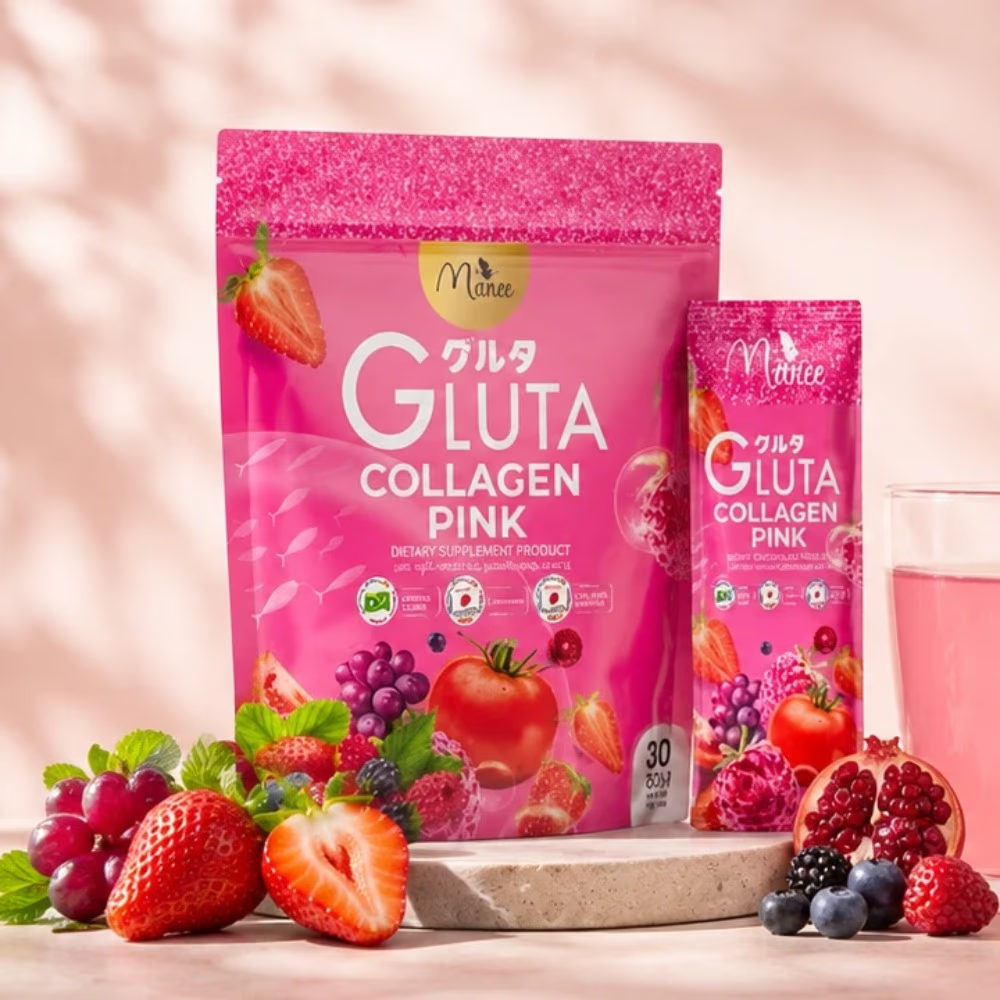
Glutathione is the body's master antioxidant, a tripeptide your cells use to neutralise damage. It is marketed hard as a skin-brightening, even whitening, supplement, but the honest picture is more modest. Oral absorption is poor, results are gradual and vary from person to person, and daily sun protection matters more. Here is what it actually does, and how to choose sensibly.
If you have seen it sold as a fast track to brighter, glowing skin, this is the part the ads skip. Glutathione is real and important, but swallowing it is an inefficient way to get it, and the brightening studies are limited and mixed. That does not make it useless. It means choosing well and expecting gradual, realistic change.
What is glutathione, and what does it do in the body?
Glutathione is a tripeptide, a small molecule built from three amino acids (glutamate, cysteine, and glycine). It is the body's main intracellular antioxidant, which means every cell makes it and uses it to neutralise the free radicals that damage cells over time. It exists in two forms, an active reduced form called GSH and a spent oxidised form called GSSG.
Beyond mopping up free radicals, glutathione supports your liver's detox pathways and helps your immune cells work properly. This antioxidant biology is settled science. It is the reason glutathione matters to your health regardless of what it does or does not do for your skin.
Your body makes its own glutathione around the clock, but levels can dip with age, illness, a poor diet, or heavy oxidative stress. That is part of why glutathione supplements and glutathione-supporting nutrients have a following in the first place.
Does glutathione actually brighten skin? What the evidence shows
Here is the honest answer. The evidence that oral glutathione brightens skin is modest, mixed, and mostly short-term. Some studies report a small, gradual evening of overall skin tone, others show little effect, and the improvements that do appear tend to fade once you stop. No good evidence supports it as a reliable whitening treatment.
The proposed mechanism is real but limited. Glutathione can inhibit tyrosinase, the enzyme that drives melanin production, and it may nudge the skin toward producing lighter pheomelanin rather than darker eumelanin. In a lab that sounds promising. In practice, getting enough active glutathione to your skin cells through a pill is the hard part, which is the next problem.
The reason results vary so widely comes down to a few things: the dose, how long you take it, your starting skin tone, and how much sun you get. Two people on the same supplement can see very different outcomes, which is exactly why honest guidance talks in ranges rather than promises.
Myth vs reality Myth: Glutathione pills whiten your skin fast. Reality: Oral absorption is poor, any brightening is modest and gradual, and sun protection matters more for even tone. |
One thing the marketing almost never mentions. For an even, brighter complexion, daily sun protection, which matters more for even tone, does more than any glutathione supplement. UV exposure is the single biggest driver of uneven tone and dark patches, so sunscreen is the foundation everything else sits on.
Why oral glutathione is hard to absorb (and what helps)
Swallowed glutathione faces a basic obstacle. Your gut breaks the tripeptide apart with digestive enzymes before much of it reaches your bloodstream intact, and there is no dedicated transporter to carry whole glutathione across the gut wall. So a large share of an oral dose never arrives as glutathione at all. This is the fact the marketing quietly leaves out, and it explains why results are modest.
That does not make an oral supplement pointless. A few things help. Pairing glutathione with vitamin C supports your body's own glutathione levels and adds its own antioxidant benefit. A reduced, active form (often labelled L-glutathione or reduced glutathione) is the one worth looking for. And the building blocks your body uses to make glutathione, such as the amino acid cysteine, matter as much as the finished molecule in a capsule.
What are the real benefits beyond brightening?
Strip away the brightening hype and glutathione still earns its place as an antioxidant. Its core job, protecting cells from oxidative stress and supporting liver detoxification, is well established. For skin specifically, that antioxidant activity may help defend against the daily oxidative damage that ages skin, though this is quiet support, not a dramatic anti-aging effect.
Oxidative stress from UV, pollution, and everyday metabolism is one of the drivers behind dull, prematurely aged skin, so a well-supplied antioxidant system is genuinely useful. The realistic framing is that glutathione is one contributor to that system, not a standalone fix for your complexion.
This is why so many beauty supplements pair glutathione with collagen and vitamin C. Vitamin C is needed for your body to build collagen, and collagen peptides are studied for skin elasticity and hydration. The combination works on glow from a few angles at once rather than relying on glutathione alone. If collagen is the part you care about most, how to choose a collagen supplement is worth a read on its own.
How to choose a glutathione supplement
If you decide to try glutathione, a few criteria separate a sensible supplement from a hopeful purchase.
A sensible glutathione checklist Form: a reduced or L-glutathione (the active form). Dose: a sensible amount, commonly around 250 to 500 mg a day in studies. Vitamin C: pair it, or pick a formula that already includes it. Beauty-from-within: a gluta-plus-collagen formula covers more ground than glutathione alone. IV: avoid the casual IV route (more on safety below). Expectations: realistic and gradual, with daily sunscreen doing the heavy lifting. |
As an example of the beauty-from-within approach, a glutathione-and-collagen drink such as Manee's pink sachets combines L-glutathione with marine collagen, vitamin C from acerola cherry, and vitamin E in a single sugar-free sachet. It is one sensible format, not a magic bullet, and it pairs the glutathione with the vitamin C and collagen that a glow routine actually benefits from. If you want specific products compared side by side, our full glutathione and collagen supplement buyer's guide ranks the options.
Supplements are only one lever. You can also work from the outside, where topical actives reach the skin directly and sidestep the absorption problem. A retinal booster for topical glow supports skin renewal over time.
For rougher, drier areas like elbows and knees, a lactic-acid body lotion gently exfoliates and smooths texture. And if uneven tone is your main concern, a topical option for uneven tone like azelaic acid has its own solid evidence and targets pigmentation directly.
Is glutathione safe?
For most healthy adults, oral glutathione is well tolerated at typical doses. The bigger safety question is not the pill. It is the injection.
Intravenous glutathione, sold in clinics as a whitening drip, is a different matter. It has been linked to serious reactions including anaphylaxis and, with repeated use, liver injury, and there is no standardised safe dose for cosmetic use. This is a medical procedure, not a beauty treatment to take lightly. If you are considering IV glutathione, that is a conversation for a doctor, not a walk-in clinic.
Oral (pills, drinks) | Topical (creams, serums) | IV (drips) | |
How it is used | Daily supplement | Applied to the skin | Injected in a clinic |
What evidence shows | Modest, variable, short-term. Poor absorption | Limited, some support | Weak evidence for cosmetic use |
Safety | Generally well tolerated | Generally well tolerated | Serious risks: anaphylaxis, liver injury |
Verdict | Reasonable, with realistic expectations | A gentler complement | Avoid for cosmetic use, medical only |
With any supplement, if you are pregnant or nursing, take regular medication, or have a health condition, check with a doctor or a MedX pharmacist before starting. This guide explains the ingredient and is not medical advice.
Frequently Asked Questions
Does glutathione whiten your skin?
The honest answer is that the evidence does not support glutathione as a reliable skin-whitening treatment. Some studies show a modest, gradual evening of overall tone, but the effect is variable and tends to fade after you stop. For a brighter, more even complexion, daily sun protection does more than any glutathione supplement.
Does oral glutathione actually work?
Only modestly. Your gut breaks down most swallowed glutathione before it reaches your bloodstream, so a lot of an oral dose never arrives intact. It still contributes to your antioxidant status, especially paired with vitamin C, but expect gradual, subtle support rather than a dramatic change.
Is oral or IV glutathione better?
For most people, oral is the sensible choice despite its modest effect. Intravenous glutathione, sold as a whitening drip, carries serious risks including allergic reactions and liver injury, and it has no standardised safe dose for cosmetic use. Treat IV as a medical procedure to discuss with a doctor, not a beauty shortcut.
What is reduced glutathione?
Reduced glutathione (GSH) is the active form your cells actually use as an antioxidant, as opposed to the spent oxidised form (GSSG). When choosing a supplement, look for a reduced or L-glutathione form, which is the version worth taking.
Should I take glutathione with vitamin C?
Yes, it is a sensible pairing. Vitamin C supports your body's own glutathione levels and adds its own antioxidant effect, and it is needed to build collagen. Many beauty supplements combine the two for exactly this reason.
How long does glutathione take to work on skin?
There is no fixed timeline, and any result depends on the dose, how long you take it, your baseline skin tone, and your sun exposure. Change is gradual, usually judged over weeks to months rather than days. Consistent daily sun protection will influence your skin tone more than the supplement will.
Is glutathione safe to take daily?
For healthy adults, oral glutathione is generally well tolerated at typical doses of around 250 to 500 mg a day. If you are pregnant or nursing, take regular medication, or have a health condition, check with a doctor or pharmacist before taking it daily.
Can I take glutathione with collagen?
Yes, and it is a common combination in beauty-from-within supplements. Glutathione provides antioxidant support while collagen peptides are studied for skin elasticity and hydration, and vitamin C ties them together. The two work on glow from different angles rather than competing.
The honest bottom line on glutathione
Glutathione is a genuine master antioxidant, and as part of a glow routine it is a reasonable thing to take, as long as you pick a well-formed supplement, pair it with vitamin C, protect your skin from the sun, and expect gradual rather than dramatic change. The honest version is less exciting than the ads, but it is the one that will not waste your money.
If you want to start, a sensible gluta-and-collagen formula plus a daily sunscreen is a solid, realistic combination, and a MedX pharmacist can help you choose without the hype.
all blogs