


How to Use the Ozempic Injection Pen: A Beginner's Guide
May 27, 2026
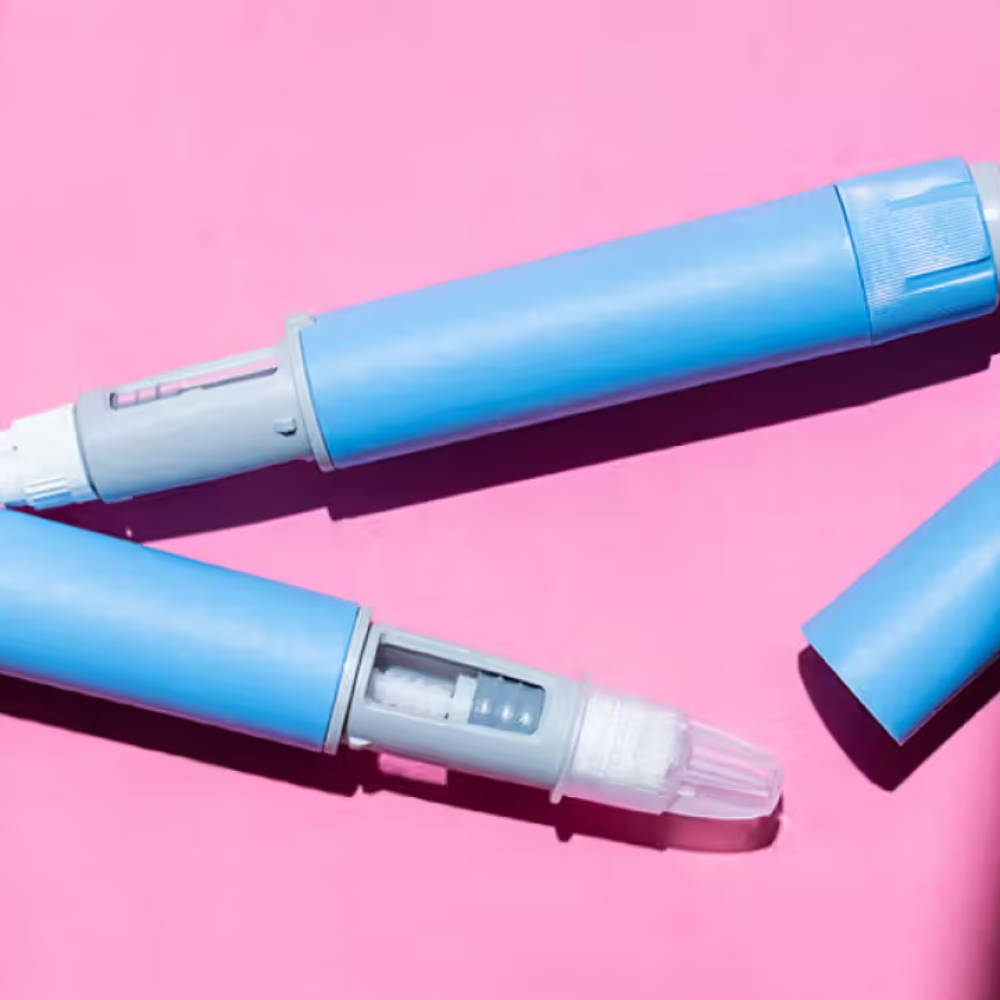
That pen in the fridge. Still there.
You're not the only one. First-time Ozempic injection users routinely describe leaving the pen untouched for days, sometimes a full week, before finally working up to the first dose. Some describe it as "the longest week of their life." A few say the pen just sat there, silently judging them from behind the butter compartment.
Here's what every single one of them says afterward: it was nothing.
The needle is 4-6 mm. Shorter than a pencil eraser. Most users report a brief, light pinch that lasts about one second -- and over 90% of people who had needle anxiety going in call their first injection "much easier than expected," a figure that holds up across patient communities, clinical feedback reports, and the kind of anecdotal thread on forums where people describe the exact dread you're probably feeling right now.
Ozempic (semaglutide) is a once-weekly semaglutide injection delivered via pre-filled pen. The dose goes into the abdomen, thigh, or upper arm. Each pen holds four weekly doses -- a month's worth. The starting dose is 0.25 mg for the first four weeks, then 0.5 mg for maintenance.
This guide walks through every step, based on FDA prescribing information and the official Novo Nordisk pen guide, from taking the pen out of the fridge to disposing of the needle. If you've been prescribed the starter dose, the Ozempic 0.25mg starter pen is available at MedX Pharmacy. All prescription medications require a valid prescription from a licensed healthcare provider.
What Is the Ozempic Semaglutide Injection?
GLP-1 receptor agonist. That's the class.
GLP-1 stands for glucagon-like peptide-1 -- a hormone the body produces naturally to regulate blood sugar after meals and to signal to the brain that you're full, which is why drugs in this class tend to reduce appetite as a secondary effect alongside their primary glycemic action.
FDA approval covers three things: improving blood sugar control in adults with type 2 diabetes; reducing cardiovascular risk in adults with T2D and established heart disease; and slowing kidney disease progression in adults with T2D and chronic kidney disease. Worth noting -- Ozempic is not FDA-approved for weight loss. Wegovy, which contains the same molecule at higher doses, is the approved weight management option. Off-label use happens, but that's a separate conversation to have with your doctor.
The pen itself is different from a traditional syringe in one important way: you don't draw medication from a vial. It arrives pre-filled. You attach a needle, dial to your dose, press a button. That's the whole mechanism. One pen, four weekly doses.
Dosing is incremental. Standard schedule: 0.25 mg once weekly for four weeks (tolerability dose, not therapeutic), then 0.5 mg weekly. If more control is needed after at least four weeks at 0.5 mg, the dose may increase to 1 mg weekly. Maximum is 2 mg weekly. For a full breakdown by stage, see our Ozempic dosing schedule guide.
Sounds obvious. It's not always obvious in the moment. Scrambling for an alcohol swab while pinching a fold of skin with your other hand is not a good experience. A clean, flat surface with decent lighting makes it faster and easier, you'll be done in under two minutes if you're prepared. Get your supplies in one place, check them, then begin.
Supply | What to check |
Ozempic pre-filled pen | Confirm the label reads Ozempic. Check the expiration date. Look through the medicine window -- the liquid should be clear and colorless. |
NovoFine needle (new) | One sealed needle per injection. Never reuse. |
Alcohol swab | Clean the injection site before you start. Let it dry fully. |
Sharps disposal container | Used needles go in here immediately. Never into household bins. |
The medicine window check gets skipped more than it should. Clear and colorless is the standard. Cloudy, discolored, or containing visible particles means stop -- don't use that pen. Call your pharmacist.
Approved Injection Sites for Ozempic
Three locations, per the FDA prescribing information for Ozempic: abdomen, front of thigh, or upper arm. All three are subcutaneous -- meaning under the skin, not into muscle.
Injection site | Where exactly | Notes |
Abdomen | At least 5 cm (2 inches) from the navel | Most people start here. Easy to pinch and reach. |
Front of the thigh | Middle third of the thigh, front surface | Good if abdominal injections feel awkward. |
Upper arm | Back or side of the upper arm | You may need someone to help with this one. |
Rotate. Every week, a different site. Injecting the same spot repeatedly causes skin changes -- thickening, lumps, scar tissue -- that make injections harder and can affect how the medication absorbs.
Skip any patch of skin that's bruised, tender, scarred, or hardened. Don't inject through clothing. If you also inject insulin: same body region is acceptable, but not adjacent spots. And never -- not once, not in an emergency -- mix Ozempic and insulin in the same syringe.
How to Inject Ozempic: Step-by-Step Instructions
Short version: attach needle, select dose, pinch skin, insert at 90 degrees, press and hold the dose button until the counter hits zero, count to six slowly, withdraw. The Ozempic official pen guide also has a visual walkthrough on the manufacturer's site if that helps.
Full steps:
Step 1: Check the pen. Read the label to confirm it says Ozempic. Look through the medicine window. Clear and colorless only. Cloudy or discolored -- set it down and call your pharmacist.
Step 2: Attach a new needle. Tear the paper tab off a sealed NovoFine needle. Push it straight onto the pen tip and twist until snug. Pull the outer cap off and keep it -- you'll need it for disposal. Pull the inner cap off and discard it.
Step 3: Flow check (new pens only). First injection from a brand-new pen requires this extra step, which takes about fifteen seconds and confirms the pen is working before you actually inject into your skin: turn the dose selector to the flow check symbol, point the needle upward, press and hold the dose button until you see a single drop appear at the tip one drop is enough, you're done. This step happens exactly once per new pen.
Step 4: Set your dose. Turn the dose selector until the counter shows your prescribed dose. Dialed wrong? Turn it forward or backward to fix it no harm done. Your doctor will have told you whether that's 0.25 mg, 0.5 mg, or 1 mg. For reference, the Ozempic 0.5mg pen is available at MedX Pharmacy. A valid prescription is required.
Step 5: Clean the site. Alcohol swab on the injection area. Wait for it to dry fully wet skin stings more than dry skin. Pinch a fold of skin at the chosen site.
The needle is 4-6 mm. Roughly the width of two stacked coins. It's engineered specifically for subcutaneous delivery, it does not reach muscle tissue.
Step 6: Insert the needle. Push it into the pinched skin fold at a 90-degree angle. All the way in.
Step 7: Deliver the dose. Press the dose button and hold it down you'll hear a click when you press it, which is the pen's internal mechanism activating, perfectly normal and keep holding while the counter counts down from your selected dose to zero; once it hits zero, keep the needle in your skin and count slowly to six before you pull out, because that pause is what ensures the full dose is absorbed and not lost to surface residue.
Step 8: Remove and dispose. Release the button. Pull the needle out. A small drop of liquid at the needle tip is normal residue from the delivery mechanism, not a sign of a partial dose. Put the outer cap back on the needle, unscrew the whole needle assembly, and drop it directly into your sharps container. Don't recap with the inner cap. Replace the pen cap.
What Does the Ozempic Injection Feel Like?
Most people say: not much.
The needle is a 32-gauge NovoFine either the Plus 32G 4mm or the standard 30G thinner than a sewing needle, shorter than a pencil width. It doesn't reach muscle.
One second. That's it. A brief, light pinch and it's done. Some users don't feel anything at all. The 90%-plus figure for "easier than expected" among needle-anxious first-timers shows up consistently whether you're reading clinical feedback, patient forums, or talking to people who've been where you are right now.
The click. That's what catches people off guard.
When you press the dose button, the pen's mechanism makes an audible sound. It's not painful. It's not a malfunction. By week three you'll have stopped noticing it.
If the pen has been in your fridge for five days while you worked up to this, what you've been experiencing is anticipation and anticipation of pain is reliably worse than the actual event. MedX Pharmacy carries a full range of diabetes and weight management medications for patients with valid prescriptions.
What to Do If You Miss a Dose
Five days.
That's your window. Miss a scheduled injection and you've got five days from that date to still take it and stay on track.
Day six or later? Skip entirely. Don't try to catch up, don't double up. Just take the next one on your regular schedule.
Practical example: you inject Mondays. This Monday slipped by. Tuesday through Saturday still fine. Sunday? That's day seven. Past the window. Skip it. Back to Monday.
Changing your injection day permanently is allowed, as long as any two consecutive doses are at least two days apart. For more detail on schedule changes, see the Novo Nordisk prescribing information.
How to Store Your Ozempic Pen
Condition | Temperature | How long |
Before first use | Refrigerated: 2-8°C (36-46°F) | Until the expiration date on the pen |
After first use | Room temperature: 15-30°C (59-86°F) or refrigerated | Up to 56 days (8 weeks), then discard |
Frozen pen. Don't use it.
Even once is enough. Freezing damages the medication irreversibly. Discard it and get a replacement don't try to thaw and reuse it.
Cap stays on between uses. Light degrades the medication. Store without a needle attached. Remove and dispose of the needle immediately after every injection, then cap the pen.
Ozempic Injection Safety Tips
These aren't suggestions. No exceptions.
Never share your pen. Fresh needle or not, the pen itself cannot be shared between patients. Blood-borne pathogen transmission is the reason. One pen, one person.
New needle every injection. Reused needles dull quickly. Dull needles hurt more and carry infection risk. It takes thirty seconds to attach a fresh one. Do it every time.
Subcutaneous only. Not into a vein. Not into muscle. The pen and needle are designed for under-skin delivery. Using them any other way is both ineffective and potentially harmful.
Keep insulin separate. If you also inject insulin: same body region is acceptable, adjacent spots are not, and the same syringe is never under any circumstances an option. These are separate injections.
Sharps container. Needle goes in immediately after removal. Not into the bin, not into a bottle, not into "I'll deal with it later." A proper sharps container is cheap, available at pharmacies, and prevents injuries to anyone who later handles your waste.
For what to watch for after injecting, including side effects to know about, read our Ozempic side effects guide.
Frequently Asked Questions About Ozempic Injections
What is Ozempic injection used for?
Primarily, blood sugar management in adults with type 2 diabetes. The FDA also approved it for two additional indications that are less commonly discussed: reducing cardiovascular risk in adults with T2D and established heart disease, and slowing kidney disease progression in adults with T2D and chronic kidney disease. One thing Ozempic is not approved for is weight loss, that's Wegovy, which uses the same molecule (semaglutide) but at doses approved specifically for chronic weight management. Off-label use for weight loss is common in practice, but "common" isn't the same as "approved," and it warrants a real conversation with your doctor rather than a self-directed decision.
Does the Ozempic injection hurt?
Barely.
The needle is 4-6 mm, fine-gauge, designed for the most superficial layer of tissue under the skin. Most people describe a one-second pinch. Over 90% of users with needle anxiety say the injection was easier than expected. The second dose is easier than the first. The third is easier still. The hard part isn't the needle it's the first reach into the fridge.
Where do you inject Ozempic?
Three approved sites: abdomen (at least 5 cm from the navel), front of the thigh, or upper arm. Rotate weekly. Avoid bruised, scarred, tender, or hardened skin anywhere you're considering.
What are the common side effects of Ozempic?
Nausea leads reported by 15-20% of users. Then:
- Diarrhea (8-9%)
- Vomiting (5-9%)
- Constipation (5-6%)
- Abdominal pain (5-7%)
Most of these are mild to moderate and improve as the body adjusts to the medication over the first few weeks. Severe or persistent side effects mean a call to your healthcare provider.
Who should not take Ozempic?
Contraindications include: personal or family history of medullary thyroid carcinoma (MTC); Multiple Endocrine Neoplasia syndrome type 2 (MEN 2); prior serious hypersensitivity to semaglutide; Type 1 diabetes; diabetic ketoacidosis. This list isn't exhaustive -- a full medical history review with your healthcare provider is required before starting any new medication.
Is there an Ozempic pill instead of injection?
Yes.
The FDA approved an oral Ozempic tablet on February 4, 2026, available in 1.5 mg, 4 mg, and 9 mg daily doses. Talk to your doctor about whether the injectable pen or the oral option is the better fit for your situation.
Ready to Start Your Ozempic Treatment?
First injection: the hardest one.
After that, it gets faster, easier, and eventually just becomes part of the routine. If you've been prescribed Ozempic and you're ready to begin, the Ozempic 1mg pen and other dose options are available at MedX Pharmacy. All prescription medications require a valid prescription from a licensed healthcare provider.
Putting It Together
Under two minutes. That's the full process once you've done it a few times.
The pen handles measurement and delivery. Your part: new needle, set dose, clean skin, pinch, insert at 90 degrees, press and hold until zero, count to six, withdraw, dispose. That's it.
New needle. Every time.
Ninety degrees. Six-count hold. Rotate sites weekly.
For more on the medication and available options, visit our complete Ozempic guide or browse the pen selection at MedX Pharmacy.
Medical Disclaimer: This article is for informational purposes only and does not constitute medical advice. Always consult your healthcare provider before starting, stopping, or changing any medication. The information presented is based on publicly available clinical data and prescribing information current at the time of writing. MedX Pharmacy is a licensed pharmacy; all prescription medications require a valid prescription from a licensed healthcare provider.
all blogs