


Mineral Sunscreen: How Zinc & Titanium SPF Protects Skin in the UAE
Jun 23, 2026
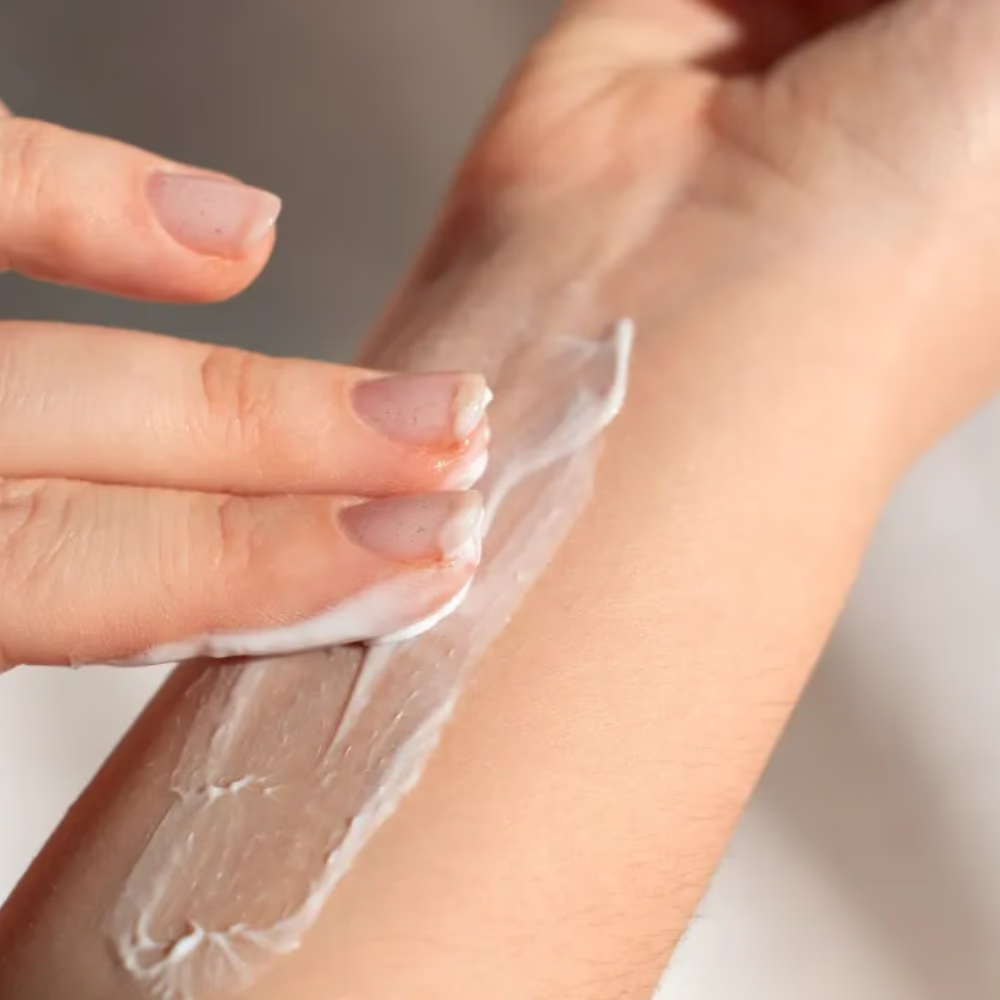
Mineral sunscreen uses zinc oxide and titanium dioxide to sit on your skin and block UV rays, and it protects the moment you apply it. It is the gentler choice for reactive, breakout-prone skin. But “mineral equals better” is marketing, not science, and in UAE heat the right pick matters far more than the label on the bottle.
This guide gives you the honest pharmacist version. What zinc and titanium actually do, who should choose mineral over chemical, and how to wear it through a Dubai summer without the grey cast or the midday slide.
What is mineral sunscreen, and how does it work?
Mineral sunscreen is a sun-protection product that uses inorganic filters, zinc oxide and titanium dioxide, to shield skin from UV radiation. It forms a protective layer on the skin's surface that absorbs, scatters, and reflects UVA and UVB rays. It works immediately on application and suits sensitive and acne-prone skin.
You will also see it called physical sunscreen. Same thing. The two active ingredients are minerals, which is where the name comes from, and both are approved sunscreen actives recognised by the US FDA.
Here is the part most product pages skip. The old story said mineral filters work like tiny mirrors that bounce UV away. That is only a fraction of what happens. According to the BBC and recent research summarised by UNSW in 2025, zinc oxide and titanium dioxide mostly absorb UV and convert it to a small amount of heat, with some scatter and reflection on top. Chemical filters absorb UV too. So the gap between the two categories is smaller than the marketing suggests, which matters when you are deciding what to actually buy.
A clean example of a 100% mineral formula is CeraVe's hydrating mineral SPF 50 with zinc oxide and titanium dioxide, which pairs the two filters with ceramides so it does not strip the skin barrier. It is a useful reference point for what “fully mineral” looks like on an ingredients list, and we will come back to who it suits later on.
Mineral vs chemical sunscreen: which is actually better?
Neither is universally better. Mineral sunscreen is the safer starting point for sensitive, reactive, or acne-prone skin and protects instantly. Chemical sunscreen tends to feel lighter, absorbs clear with no white cast, and is easier to reapply over makeup. The right answer depends on your skin and your day, not on which one sounds more natural.
Two honest points worth holding on to. First, modern mineral and chemical filters both work largely by absorbing UV, so the “mine just reflects, theirs soaks in” framing is outdated. Second, plenty of products labelled “mineral” on the front include chemical filters in the formula, so the label alone does not tell you what you are getting. Read the actives list, which we cover below.
Here is the practical comparison.
Factor | Mineral sunscreen | Chemical sunscreen |
Active filters | Zinc oxide, titanium dioxide | Avobenzone, octocrylene, and similar organic filters |
How it works | Sits on the surface and mostly absorbs UV, with some scatter and reflection | Absorbs UV and releases it as heat |
Protection starts | Immediately on application | After roughly 15 to 20 minutes |
Best for | Sensitive, reactive, acne-prone skin, and children | Daily wear, under makeup, no white cast wanted |
Main trade-off | Can leave a white cast and needs disciplined reapplication in heat | More likely to sting eyes or irritate very reactive skin |
Feel | Thicker, sometimes leaves a slight finish | Lighter, blends invisible |
If you have never had a problem with chemical sunscreen and you like how it wears, there is no rule that says you must switch. Mineral earns its place when your skin reacts, breaks out, or you simply want protection that is working the second you step outside.
Is mineral sunscreen better for sensitive or acne-prone skin?
For sensitive or acne-prone skin, mineral sunscreen is the lower-risk choice. Zinc oxide and titanium dioxide sit on the surface rather than reacting in the skin, so they are less likely to trigger stinging, redness, or breakouts. Zinc oxide is also naturally soothing, which is why it turns up in nappy creams and calamine. This is a tendency, not a guarantee, and a patch test is still smart.
The Cleveland Clinic and Healthline both point to mineral filters as the gentler option for reactive skin and conditions like rosacea or eczema. If your skin flares easily, that is a real reason to lean mineral. Look for the words non-comedogenic on the label, which signals the formula is designed not to clog pores.
Sensitive skin rarely travels alone. If cleansers leave your face tight or stinging, it is worth choosing a cleanser for sensitive skin that respects the barrier before you even get to the SPF step, because a stripped barrier makes everything else react more.
What are the downsides of mineral sunscreen?
Mineral sunscreen has two honest downsides. It can leave a white or greyish cast on the skin, which shows up more on deeper skin tones, and it needs disciplined reapplication because it sits on the surface and rubs or sweats off more readily than you would like in the heat. Texture can also feel thicker than a chemical formula.
The white cast, and how to beat it
The cast comes from the minerals themselves, which are white. On fair skin it usually blends with a minute of rubbing. On medium to deep skin tones it can read ashy, and that is a genuine frustration, not a user error. The fix is formula choice. A tinted mineral sunscreen carries iron oxides that add warmth and cancel the grey, so it disappears into a far wider range of skin tones. If white cast has put you off mineral before, a tinted version is the answer, not giving up on the category.
Reapplication in UAE heat
In 40-plus degree heat with real sweat, no sunscreen lasts the whole day, mineral or chemical. The label tells you the limit. A water-resistant SPF holds up for either 40 or 80 minutes of swimming or sweating, then it needs reapplying. Treat that number as a timer, not a promise of all-day cover. We cover the reapplication routine near the end.
How to choose a mineral sunscreen for UAE heat and skin tone
For UAE conditions, choose a broad-spectrum mineral SPF of 30 or higher, water-resistant for 80 minutes, and match the finish to your skin. Tinted for deeper tones to avoid white cast, oil-free or gel-cream for oily and acne-prone skin, and a hydrating ceramide formula for dry or sensitive skin. Broad-spectrum and SPF 30-plus are the two non-negotiables.
Use this to map your skin and situation to the right type.
Your skin or situation | What to look for | A MedX option |
Sensitive or reactive | 100% mineral, fragrance-free, ceramides, hydrating | |
Acne-prone or oily | Non-comedogenic, oil-free, lightweight or gel finish | A non-comedogenic mineral or fluid SPF from the MedX sun-care range |
Deeper skin tone (white-cast fix) | Tinted mineral with iron oxides for a no-grey finish | A tinted mineral SPF from the MedX range |
Outdoor, sport, heavy sweat | Water-resistant 80 minutes, broad-spectrum, SPF 50 | A water-resistant SPF 50, reapplied on schedule |
For most people new to mineral SPF and shopping for everyday UAE wear, a hydrating mineral SPF 50 like CeraVe's is the easy default. It is fully mineral, fragrance-free, and built around ceramides, so it covers sensitive skin and daily protection in one bottle. If you are already deep into actives at night, the SPF matters even more, which is the next point.
Mineral SPF and retinoids are a natural pair. If you use a retinoid at night, daytime sun protection is not optional, because retinised skin is more sun-sensitive. If you are weighing the actives themselves, our guide on retinal versus retinol and which one to buy pairs well with this one, and beginners can start with a simple retinol routine alongside a daily mineral SPF.
How to apply and reapply mineral sunscreen correctly
Most people who feel let down by their sunscreen are simply not using enough of it, or not reapplying. Application is where SPF is won or lost, so get this part right and the rest takes care of itself.
The application routine
- Cleanse and moisturise first, then let each layer settle for a minute so the SPF goes on evenly.
- Use two finger-lengths of product for the face and neck, or two to four pump-presses if it is a fluid. Most people use half this and lose half their protection.
- Apply mineral sunscreen as the last step of your morning routine, before makeup, and spread it in even strokes rather than rubbing it hard, which reduces white cast.
- Wait a minute before makeup or heading out. Mineral protects on contact, so there is no 20-minute wait, but a settled layer wears better.
- Reapply every two hours outdoors, and straight after swimming, heavy sweating, or towelling off. In UAE heat this is the step that actually keeps you covered.
After a full day in sun and SPF, your skin will thank you for an evening reset. Cleanse off the day with a gentle hydrating cleanser, then replenish overnight with a replenishing night cream so the barrier recovers before the next day's sun.
Frequently asked questions
Is mineral sunscreen better than chemical?
Neither is better for everyone. Mineral sunscreen is the safer choice for sensitive, reactive, or acne-prone skin and protects instantly, while chemical sunscreen feels lighter and leaves no white cast. Match the type to your skin rather than to the label. Both protect well when applied properly and reapplied.
Do dermatologists prefer mineral or chemical sunscreen?
Dermatologists generally recommend mineral filters for sensitive, reactive, or rosacea-prone skin because they are less likely to irritate, according to the Cleveland Clinic. For everyday wear, the best sunscreen is the broad-spectrum SPF 30-plus you will actually apply and reapply, whichever type that is.
What are the disadvantages of mineral sunscreen?
The two real downsides are white cast, which shows more on deeper skin tones, and the need for disciplined reapplication because it sits on the surface and sweats off in heat. Texture can feel thicker too. A tinted formula fixes the cast, and reapplying every two hours handles the rest.
How do I know if a sunscreen is mineral?
Check the active ingredients list. If the only actives are zinc oxide and titanium dioxide, it is 100% mineral. If you also see names like avobenzone or octocrylene, it is a chemical or hybrid formula, even if the front of the bottle says mineral. The actives list is the only reliable signal.
Is mineral sunscreen good for acne-prone skin?
Yes, mineral sunscreen suits acne-prone skin well, especially formulas marked non-comedogenic and oil-free. Zinc oxide is gentle and less likely to clog pores or trigger breakouts than heavier formulas. Look for a lightweight or gel-cream texture so it sits comfortably under the UAE heat without feeling greasy.
Why does my mineral sunscreen leave a white cast?
The cast comes from zinc oxide and titanium dioxide, which are naturally white. It is more visible on medium and deep skin tones. The fix is a tinted mineral sunscreen, which adds iron oxides that warm the finish and cancel the grey, so it blends across a much wider range of skin tones.
Does mineral sunscreen protect immediately?
Yes. Mineral sunscreen works the moment you apply it, because the filters sit on the skin's surface and start blocking UV on contact. Chemical sunscreen needs about 15 to 20 minutes to settle first. With mineral SPF you can apply it and step outside, though letting it settle a minute helps it wear better.
How often should I reapply mineral sunscreen in UAE heat?
Reapply every two hours when you are outdoors, and immediately after swimming, heavy sweating, or towelling off. A water-resistant SPF lasts 40 or 80 minutes of sweat or water before it needs topping up. In Dubai summer conditions, treat that figure as a timer, not all-day protection.
The honest bottom line
Mineral sunscreen earns its place for sensitive, reactive, and breakout-prone skin, and it starts protecting the second it touches your face. The trade-offs are real but manageable. Beat the white cast with a tinted formula, and treat reapplication as a fixed habit in the heat rather than an afterthought. Pick the formula built for your skin and the climate, not the one with the prettiest label. A hydrating mineral SPF 50 like CeraVe's is a sound place to start, and a MedX pharmacist is a tap away if you want a second opinion before you buy.
Medical note:
Sun protection reduces UV damage and lowers the risk of sunburn, premature ageing, and skin cancer when used as part of broader sun-safe habits. It is one measure, not a guarantee. If you have a skin condition, are pregnant, or have specific concerns, consult a doctor or pharmacist for advice suited to you.
all blogs