


Normal Blood Sugar Levels and How to Test at Home With a Glucometer Kit
Jul 20, 2026
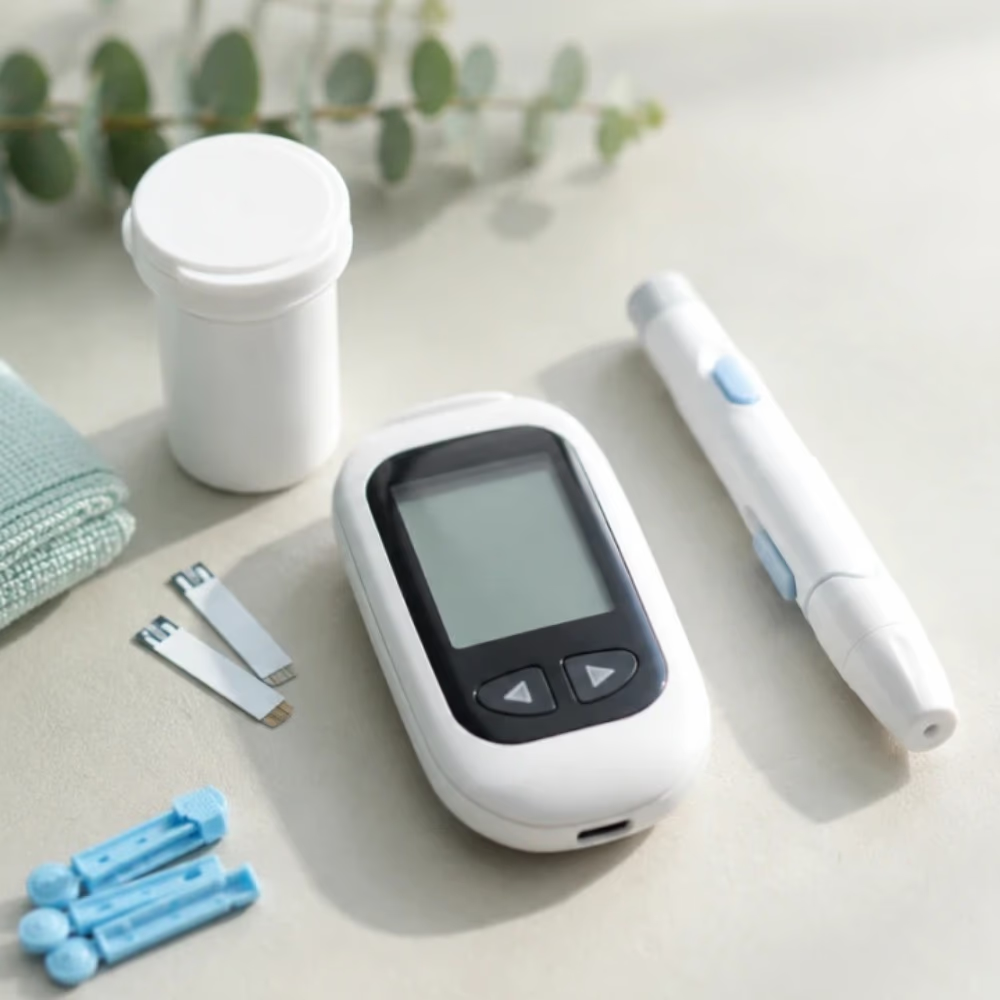
A normal fasting blood sugar reading sits between 70 and 99 mg/dL, and a normal reading two hours after a meal stays under 140 mg/dL. If you are checking at home for the first time, that is the number you are looking for.
And you do not need to book a home-nurse visit to find it. A glucose meter, a test strip, and a one-second finger prick give you the same reading a nurse would take, any time you want it, for a fraction of the cost of a recurring appointment.
Here is what those numbers actually mean, what a healthy range looks like fasting, after meals, and in pregnancy, and exactly how to test yourself at home.
What Is a Normal Blood Sugar Level?
Blood glucose monitoring means measuring the sugar in your blood with a glucose meter, a test strip, and a small drop of blood from a finger prick. A normal fasting reading falls between 70 and 99 mg/dL. A normal reading two hours after eating stays below 140 mg/dL. Readings that settle above those ranges, more than once, are worth a conversation with your doctor.
Category | Fasting | 2 hours after eating | A1C |
Normal | 70 to 99 mg/dL | Below 140 mg/dL | Below 5.7% |
Prediabetes | 100 to 125 mg/dL | 140 to 199 mg/dL | 5.7 to 6.4% |
Diabetes | 126 mg/dL or higher | 200 mg/dL or higher | 6.5% or higher |
Reference ranges based on ADA-consistent guidance. General reference only, not a diagnosis.
UAE labs usually report in mmol/L rather than mg/dL. In those units, a normal fasting reading is 3.9 to 5.5 mmol/L, and a normal post-meal reading is under 7.8 mmol/L. Both scales describe the same thing, so use whichever your meter and your clinic use.
The middle band matters as much as the top one. A fasting reading of 100 to 125 mg/dL sits in the prediabetes range, which is a warning light rather than a diagnosis. Catching it early, and seeing it clearly in your own readings, is one of the most useful reasons to test at home.
One reading on its own rarely tells the whole story. A single high number after a heavy meal is different from the same number showing up every morning before you have eaten. What matters is the pattern across several days, which is exactly what home testing lets you see.
These ranges are general reference points, not a diagnosis. If your readings sit outside the normal range, confirm them with a lab test and talk to your doctor.
What Is a Normal Blood Sugar Level in Pregnancy?
Pregnancy targets are tighter than general adult ranges, because steady glucose matters more for both mother and baby. During pregnancy, a healthy fasting reading stays below 95 mg/dL, a reading one hour after eating stays below 140 mg/dL, and a reading two hours after eating stays below 120 mg/dL.
Timing | Target during pregnancy |
Fasting | Below 95 mg/dL |
1 hour after eating | Below 140 mg/dL |
2 hours after eating | Below 120 mg/dL |
Here is the part that matters most. A home glucometer helps you watch these numbers day to day, but it does not diagnose gestational diabetes. That diagnosis comes from your doctor, usually through a glucose tolerance test done at a clinic. If you are pregnant and have any concern about your glucose, or your home readings run above these targets, talk to your doctor and let a lab test confirm what is going on. Self-testing supports that care. It does not replace it.
What You Need to Test Your Blood Sugar at Home
Home testing needs three things: a glucose meter that displays your result, test strips that hold each blood sample, and a lancing device with lancets to draw the drop. That is the entire kit, and once you own it, every test costs only the strip and the lancet you use. The easiest way to get all three at once is a complete glucose monitoring kit that bundles the meter, a starter supply of strips, and a lancing device together, such as the Accu-Chek Instant kit. Popular meters move in and out of stock quickly in the UAE, so check current availability before you settle on one model.
Strips are meter-specific, which catches out a lot of first-time buyers. Each meter reads only the strip line built for it, so you match strips to your exact model, like the Accu-Chek Performa strips for a Performa meter. Strips also carry an expiry date and need to stay sealed in their vial, away from heat and humidity, which matters through a Gulf summer.
Because strips and lancets are consumables you keep rebuying, the running cost adds up faster than the meter itself, so weigh strip compatibility and cost per test before you commit to a system. For the prick itself, a lancing device like the Accu-Chek Softclix lancets set lets you dial the depth up or down, which changes how much you actually feel. If you are still choosing between meters, our guide on how to choose the right glucometer for you walks through the differences that matter for daily testing.
How to Test Your Blood Sugar With a Glucometer (Step by Step)
Once you have your kit, a single test takes under a minute, and the technique is the same across most meters.
- Wash your hands with warm water and soap, then dry them fully. Warm hands bleed more easily, and wet skin dilutes the sample.
- Load a fresh lancet into the lancing device and slot a test strip into the meter. Most meters switch on the moment the strip goes in.
- Prick the side of a fingertip rather than the fleshy pad. The sides have fewer nerve endings, so it stings less and the drop still forms well.
- Gently squeeze out a small drop of blood and touch it to the edge of the strip. The strip pulls in what it needs on its own.
- Read the result in a few seconds and write it down with the date, the time, and whether it was before or after a meal. That log turns single readings into a useful picture.
Rotate which finger you use so no single spot gets sore, and never share a lancing device with anyone else. If pricking stings more than you would like, a shallower setting and a finer lancet both help, and how lancet gauge affects comfort is worth a look if you test every day.
When Should You Test Your Blood Sugar?
The two most useful moments are first thing in the morning before you eat or drink anything, which gives your fasting number, and two hours after a meal, which shows how your body handled the food. Some routines add a bedtime check to see where you settle overnight.
If your doctor has asked you to monitor for a specific reason, follow the schedule they set. If you are simply building your own baseline, a fasting reading plus one post-meal reading a day, over a week or two, already tells you a lot.
What Does a High or Low Reading Mean?
A reading below the normal range is low, known as hypoglycemia, and it can leave you shaky, sweaty, or lightheaded. A reading that runs well above the normal range, especially again and again, is high, known as hyperglycemia, and can show up as unusual thirst, frequent urination, or tiredness. An occasional number outside the range is not automatically a problem, since food, stress, illness, and even the time of day all move glucose around. A pattern is different. Repeated readings above or below normal are your signal to act. These ranges are general reference points, not a diagnosis. If your reading falls outside the normal range, or you are pregnant and have any concern about your glucose, confirm it with a lab test and talk to your doctor. A meter tells you your number. A doctor tells you what it means for you.
Frequently Asked Questions
How accurate is a home glucometer compared to a lab test?
A good home glucometer is accurate enough to track your glucose day to day and spot trends, which is what daily monitoring is for. A laboratory blood test remains the standard for diagnosis. Use your meter to watch your pattern, and let a lab test confirm anything that affects a diagnosis or a treatment decision.
Do I need to fast before a home blood sugar test?
It depends on which reading you want. For a fasting result, test first thing in the morning before eating or drinking anything except water. For a post-meal result, test two hours after you start eating. Both are useful, and together they show more than either one alone.
How often should I check if I don't have diabetes?
If you are building a baseline, a fasting reading and one post-meal reading a day over a week or two is enough to see your normal pattern. If you have a specific health reason, or your doctor has advised monitoring, follow the schedule they set instead.
What is a normal blood sugar level after eating?
For most adults, a normal reading two hours after a meal stays below 140 mg/dL, which is under 7.8 mmol/L. During pregnancy the target is tighter, below 120 mg/dL at the two-hour mark. Readings that sit higher across several days are worth checking with your doctor.
Can a home reading diagnose diabetes or gestational diabetes?
No. A home reading shows your glucose at that moment and helps you track trends, but it does not confirm or rule out diabetes or gestational diabetes. Only a doctor can diagnose either, using a lab test. Treat your home numbers as a prompt to seek that confirmation, not as the answer itself.
Does it hurt to prick your finger?
Far less than most people expect. Pricking the side of the fingertip instead of the pad, and setting a lancing device to a shallower depth, keeps it to a quick pinch. Rotating fingers between tests stops any single spot from getting tender.
Start With Your Own Baseline
A normal blood sugar level is 70 to 99 mg/dL fasting and under 140 mg/dL two hours after eating, and you can check it yourself in under a minute at home. No appointment, no clinic, no waiting on a nurse. Blood glucose monitoring becomes a simple habit once you have the meter, the strips, and the lancets in one place. Pick up a complete kit, take your first fasting reading tomorrow morning, and start building the picture that tells you where you actually stand. Once you are comfortable tracking one number at home, the next comes easily, and the same logic applies to blood pressure.
all blogs