


Period Pain Relief: Does a Heating Pad Work, and Which One to Buy?
Jun 23, 2026
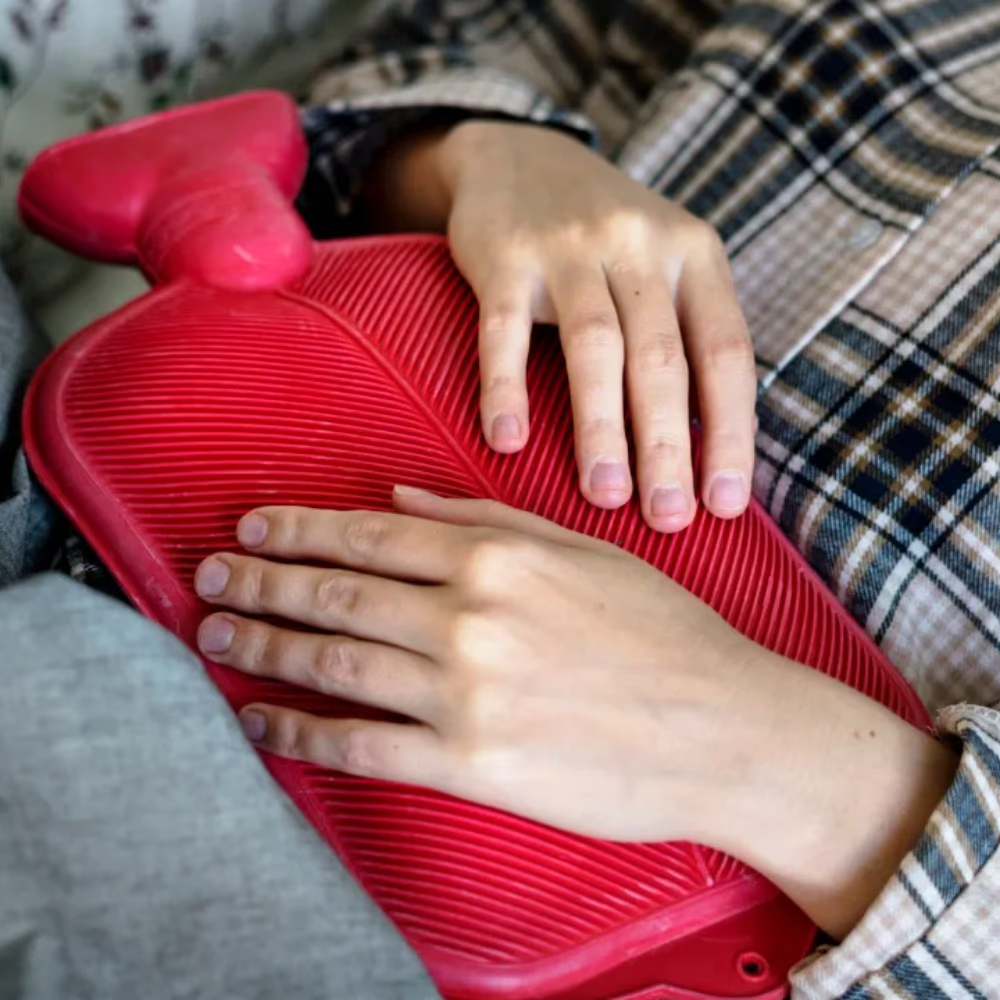
Yes, a heating pad genuinely relieves period cramps. Clinical trials show heat applied to the lower abdomen works about as well as ibuprofen, and better than paracetamol, for primary menstrual pain. It eases the uterine muscle contractions behind the cramp. The question worth answering is which type of heating pad to actually buy.
So this guide does both jobs. It shows you the proof that heat works, then walks you through the practical decision: a reusable electric pad, a hot water bottle, or a disposable patch, and how to use whichever you pick safely.
Does a heating pad actually help period cramps?
A heating pad is a reusable device that applies controlled warmth to the body, and for period pain it is placed on the lower abdomen to ease menstrual cramps. The heat increases local blood flow and relaxes the contracting uterine muscle, which relieves the pain. Clinical studies show this relief is comparable to ibuprofen for primary dysmenorrhea, the common cramping that is not caused by an underlying condition.
This is the part the gadget-sellers never tell you, because they do not need to. A 2018 systematic review of randomised trials, published in Scientific Reports, found that topical heat eased menstrual pain on par with ibuprofen and more effectively than paracetamol. Heat is not a folk remedy or a placebo. It is a clinically backed option that happens to also be cheap, drug-free, and repeatable every month.
It also explains why so many women already reach for it. In one survey of more than 9,000 women, around 61% used heat as a primary way to manage cramps, and close to 18% said painkillers alone did not give them enough relief. If you are tired of reaching for ibuprofen every month, heat is a real alternative, not a consolation prize. Here is how the three common options compare.
Topical heat | Ibuprofen (NSAID) | Paracetamol | |
Relief for primary cramps | Strong, comparable to ibuprofen | Strong, the common benchmark | Weaker than heat in trials |
How it works | Relaxes uterine muscle, boosts blood flow | Lowers prostaglandins that drive cramps | Blocks pain signals centrally |
Drug side effects | None (device, used safely) | Possible stomach upset with repeated use | Generally well tolerated |
Best for | Drug-free relief, every month, at home or the desk | Fast relief when heat is not enough | When NSAIDs do not suit you |
Ibuprofen and paracetamol are medicines, so any question about taking them is one for your doctor or pharmacist. The point here is simply the benchmark. Heat holds its own against the most common painkiller women use for cramps, which is exactly why a proper heating pad is worth owning.
Why does heat relieve menstrual cramps?
Heat relieves cramps by relaxing the uterine muscle and increasing blood flow to the area. Period cramps happen when the uterus contracts to shed its lining, driven by hormone-like compounds called prostaglandins. Those contractions can squeeze local blood vessels and starve the muscle of oxygen, which is the ache you feel. Warmth opens those vessels back up and loosens the muscle, easing the pain.
Think of it the way a warm compress soothes any tight, cramping muscle. The same principle that relaxes a stiff shoulder relaxes the cramping uterus. The difference with period pain is the prostaglandin driver, which is also why anti-inflammatory painkillers like ibuprofen work, they lower prostaglandins. Heat takes a different route to the same relief, with no drug involved.
Heating pad vs hot water bottle vs disposable patch: which should you buy?
For regular monthly cramps, a reusable electric heating pad is the most practical buy: steady, adjustable heat with no refilling and no waiting. A hot water bottle is the cheaper, no-power backup, and disposable patches suit travel but cost more over time because each one is single-use. The right pick depends on how often you need it and where you use it.
Factor | Electric heating pad | Hot water bottle | Disposable patch |
Reusable | Yes, for years | Yes, for years | No, single-use |
Heat control | Adjustable settings, stays constant | Starts hot, cools over time | Fixed, mild warmth |
Desk or on-the-go | Great at home or a desk, needs power | Anywhere, no power needed | Best for travel, wears under clothes |
Cost over time | One-off, cheapest long term | Very low one-off | Adds up, you rebuy every cycle |
Best for | Monthly cramps, home and desk use | Budget relief, power cuts, bedtime | Out and about, occasional use |
For most women managing cramps every month, a reusable electric heating pad like the Beurer HK-25 is the sensible choice. You get adjustable, constant heat you can use at your desk or in bed, year after year, without buying anything again. If you want a no-power backup, or something for nights and travel, a refillable hot water bottle pairs well alongside it for very little money.
If you want the full device-by-device breakdown beyond the period use-case, we compare heating pads and hot water bottles in detail in a separate guide, and there is a dedicated walkthrough on how to choose and safely use a hot water bottle if that is the route you prefer.
What to look for in a heating pad for period pain
The right heating pad for cramps has adjustable heat levels, enough size to cover the lower abdomen, an auto-off safety timer, and a washable cover. These four features cover comfort, safety, and hygiene, and they are what separate a pad worth keeping from a cheap one you stop using.
- Adjustable heat levels, so you can find a setting that soothes without overheating the skin.
- Enough size and coverage to sit comfortably across the lower abdomen or the lower back, where cramp pain often refers.
- An automatic shut-off timer, which matters if you tend to relax or doze off with it on.
- A soft, machine-washable cover for comfort against the skin and easy cleaning.
- Fast, even heat-up, so relief arrives in minutes rather than a slow warm.
Beurer pads, for example, are built around adjustable settings and an auto-off function, which is why they are an easy default for monthly use rather than a one-time gadget.
How to use a heating pad safely during your period
Used sensibly, a heating pad is very safe. Place it on the lower abdomen or lower back, use a comfortable medium setting rather than the highest, limit each session to around 15 to 20 minutes at a time, and keep a layer of clothing between the pad and bare skin. The goal is steady warmth, not as hot as you can stand.
Safe-use steps
- Position the pad over the lower abdomen or the lower back, wherever the cramp sits.
- Start on a low or medium setting. Higher is not better, and prolonged high heat on bare skin risks a burn.
- Keep a thin barrier, a layer of clothing or the pad's own cover, between the heat and your skin.
- Limit each session to roughly 15 to 20 minutes, then give your skin a break before repeating.
- Do not fall asleep on a mains-powered pad unless it has an auto-off timer. If in doubt, switch it off before bed and use a hot water bottle instead.
A slow, low-grade burn from leaving heat on bare skin too long is the main thing to avoid, and it is entirely preventable with a barrier layer and a sensible time limit. Treat the heat as relief you top up, not something you leave running all evening.
When period pain means you should see a doctor
A heating pad relieves the everyday cramps of primary dysmenorrhea. It is not a substitute for medical assessment when pain is severe. See a doctor if your period pain is severe, getting worse over time, stops you from working or sleeping, is new or different from your usual cramps, or comes with heavy bleeding, pain outside your period, or pain during sex.
When to get checked
Severe or worsening period pain can sometimes signal a condition such as endometriosis or fibroids, and research suggests around 1 in 10 women with severe cramps has an underlying pelvic cause. Heat can ease the discomfort in the meantime, but it does not address the cause. If your pain is severe, changing, or stopping you from functioning, speak to a doctor or a MedX pharmacist rather than managing it alone.
This is not meant to alarm you. The vast majority of cramps are ordinary and respond well to heat. The point is simply that a heating pad manages pain, and pain that is severe or out of the ordinary deserves a proper look from a professional.
Frequently asked questions
Is a heating pad good for periods?
Yes. A heating pad placed on the lower abdomen is an effective, drug-free way to relieve period cramps. Clinical trials put its pain relief on par with ibuprofen for primary menstrual pain. It works by relaxing the uterine muscle and improving blood flow. For severe or worsening pain, see a doctor as well.
Does heat work as well as painkillers for cramps?
For many women, yes. A 2018 review of randomised trials found topical heat relieved primary period pain about as well as ibuprofen and better than paracetamol. Heat and painkillers can also be used together. Any question about taking medication is one for your doctor or pharmacist, but heat alone is a genuine option.
Where should I put a heating pad for period cramps?
Place it on your lower abdomen, just below the belly button, where the cramping uterus sits. The lower back is a good second spot, since cramp pain often refers there. Keep a layer of clothing between the pad and bare skin, and use a comfortable medium heat rather than the highest setting.
How long should I use a heating pad on my stomach?
Limit each session to around 15 to 20 minutes, then give your skin a break before reapplying. Use a low or medium setting and keep a barrier between the pad and bare skin. Avoid falling asleep on a mains-powered pad unless it has an automatic shut-off, to prevent a low-grade burn.
Is an electric heating pad or a hot water bottle better for cramps?
An electric heating pad gives steady, adjustable heat and is the most practical choice for regular monthly cramps at home or a desk. A hot water bottle is cheaper and needs no power, which makes it a good backup for nights, travel, or power cuts. Many women keep both for different situations.
Can a heating pad cure period pain?
No. A heating pad relieves cramps, it does not cure or treat any underlying condition. For ordinary primary cramps that relief is often enough. If your pain is severe, worsening, or different from usual, that needs a doctor, because it can point to a cause that heat cannot address.
Why does heat help with menstrual cramps?
Cramps come from the uterus contracting, driven by compounds called prostaglandins, which can reduce blood flow to the muscle and cause the ache. Heat widens those blood vessels and relaxes the muscle, easing the pain. It is the same reason a warm compress soothes any tight, cramping muscle elsewhere in the body.
Are heating pads safe to use every month?
Yes, a heating pad is safe for regular use when you follow basic precautions: a medium setting, a barrier layer against the skin, sessions of around 15 to 20 minutes, and an auto-off timer if you might doze off. Being reusable, it is also the more economical choice over disposable single-use patches.
The practical takeaway
Heat works for period cramps. That is not a hopeful claim, it is what the trials show, on par with ibuprofen and without the drug. For relief you can rely on every month, a reusable electric heating pad like the Beurer HK-25 is the practical UAE buy, with a simple hot water bottle as the no-power backup. Use it sensibly, keep an eye on pain that is severe or changing, and a MedX pharmacist is a tap away if you want to talk it through before you buy.
Health note.
This article is for general information and is not medical advice. A heating pad relieves ordinary menstrual cramps. If your period pain is severe, worsening, new, or stops you functioning, consult a doctor or pharmacist for assessment.
all blogs