


What Are BCAAs and Do You Actually Need Them?
Jul 22, 2026
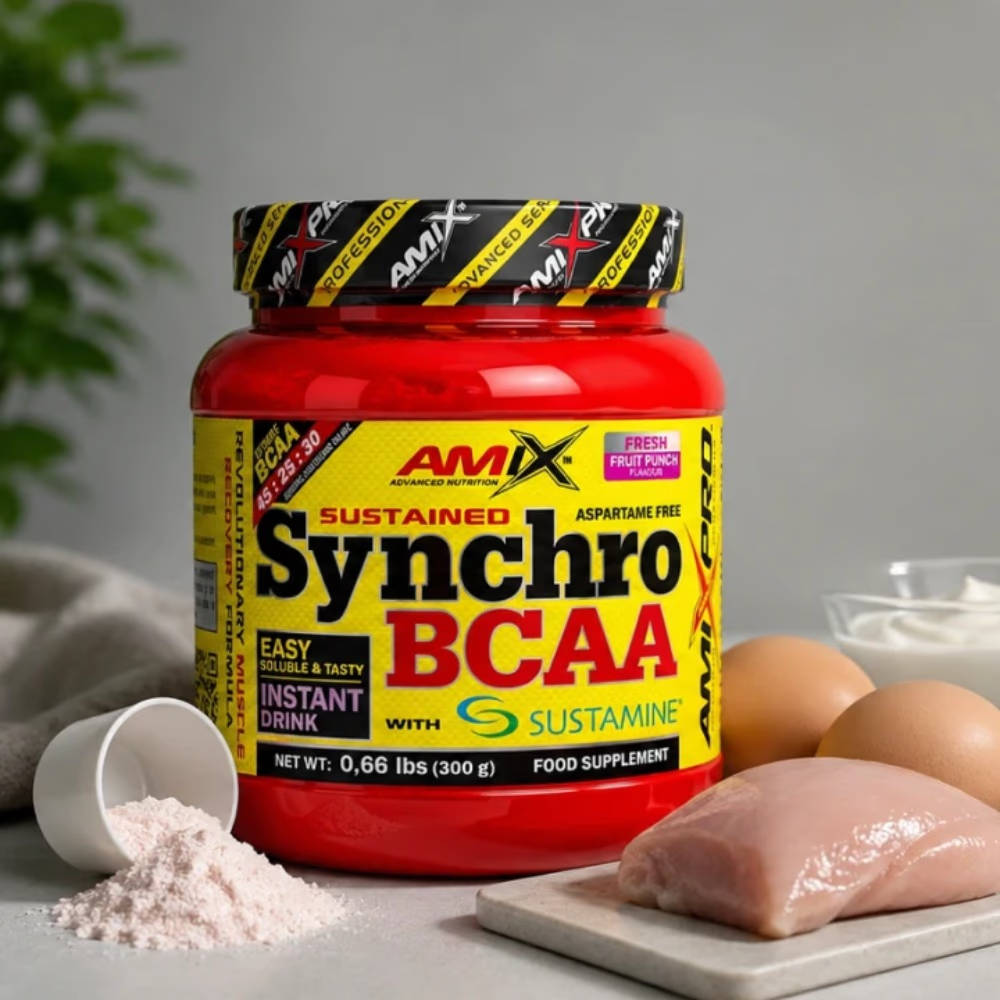
If you are already eating enough complete protein, adding BCAAs probably will not do much for you. Branched-chain amino acids are three of the nine essential amino acids your body needs, and whole protein already delivers all three.
There are a few real situations where a separate BCAA earns its place. This page walks through exactly what they are, so you are not paying for a tub you do not need.
What Are BCAAs?
Branched-chain amino acids (BCAAs) are three of the nine essential amino acids, leucine, isoleucine, and valine, that your body cannot make on its own and has to get from food or supplements. They show up naturally in protein-rich foods like meat, eggs, and dairy, and are also sold as standalone powders and capsules aimed at gym-goers. Of the three, leucine does most of the heavy lifting. It is the trigger for muscle protein synthesis, the process that repairs and grows muscle after a workout. That trigger is the reason BCAAs built their reputation. The catch, which the next section gets into, is that flipping a switch is not the same as finishing the job.
What Do BCAAs Actually Do? (The Real Evidence)
BCAAs can nudge muscle protein synthesis and may slightly blunt next-day soreness, but on their own they build less muscle than a complete protein source does. Your body needs all nine essential amino acids to actually construct muscle tissue. Feed it only three, and the process stalls at a ceiling.
A 2025 systematic review that pooled 22 controlled trials reached a blunt conclusion. When people were already eating enough protein, adding BCAAs produced no measurable extra change in muscle or body composition. Head-to-head trials point the same way. Matched for leucine, a whole protein or a full essential-amino-acid blend raises muscle protein synthesis more than isolated BCAAs do.
Building muscle from three amino acids while missing the other six is like following a recipe with only part of the ingredient list. Something happens, but not the full result.
The one benefit that holds up in some studies is a modest drop in muscle soreness after hard training. Even there, whole protein does a similar job, so you are rarely getting something your shake could not already give you.
Do You Need BCAAs If You Already Eat Enough Protein?
For most gym-goers, no. If you are hitting roughly 1.6 to 2.2 grams of protein per kilogram of body weight a day, from food or a whey shake, you are already getting plenty of BCAAs inside that complete protein. A separate BCAA supplement is only worth the money in a handful of specific situations.Not sure whether you are hitting that target? How much protein you actually need breaks down the daily math for your body weight and training load.
You probably don't need BCAAs if | BCAAs may help if |
You already hit roughly 1.6 to 2.2 g/kg of protein a day | You train fasted, on an empty stomach |
You take whey or eat meat, eggs, and dairy | You follow a low-protein or plant-based diet that falls short |
You train after a meal or a protein shake | You do long endurance sessions and want a light intra-workout drink |
The decision rule at a glance. If protein is handled, BCAAs are usually redundant.
The pattern is simple. If your protein is handled, BCAAs are redundant. If protein is genuinely low, or you train in a fasted state, that is when they start to earn their place.
BCAA Side Effects and Who Should Avoid Them
For the people who do fall into those situations, BCAAs are inexpensive, well-tolerated, and easy to add. MedX's BCAA range covers powders and capsules, including options like Allmax Aminocore, if fasted training or long endurance work is your reality.
For healthy adults, BCAAs have a strong safety record. They carry GRAS status, and studies have used doses up to 20 grams a day for as long as 12 months without significant adverse effects. When side effects do appear, they are mild, usually some stomach upset at high doses.
A few groups should not take them. Anyone with maple syrup urine disease, a rare inherited disorder, must avoid BCAAs entirely. If you have kidney disease, take Parkinson's medication such as levodopa, or are pregnant or breastfeeding, treat BCAAs as off-limits until a doctor clears them. This isn't medical advice. If you have a kidney, liver, or metabolic condition, or take prescription medication, check with a doctor or pharmacist before adding any amino acid supplement.
BCAAs vs Whey Protein: Which Should You Buy?
For most people, whey. It is a complete protein, so it delivers all nine essential amino acids plus the same BCAAs, and it usually gives you more usable protein for your money. BCAAs make sense as an addition, not a replacement, and only for the situations above.
Feature | BCAAs | Whey protein |
Amino acids provided | 3 of 9 essential | All 9 essential (complete) |
Muscle-building signal | Partial | Full |
Value per gram of usable protein | Lower | Higher |
Best for | Fasted or endurance sessions | Everyday protein and recovery |
BCAAs against a complete protein, on the points that decide the purchase.
If you are building a foundation and want one purchase that covers recovery and your daily protein, start with whey. Whey protein for beginners explains how to choose one and how much to use. And if your real goal is more strength and size for the money, creatine is the better first buy than any amino supplement, with the strongest evidence base behind it. Already decided a BCAA fits your routine? The best BCAA powders in the UAE compares specific products so you buy one that is genuinely worth it.
How Much BCAA Should You Take (If You Need It)?
If you land in one of the use cases, a typical serving is 5 to 10 grams, taken before or during training. Most tubs are formulated in a 2:1:1 ratio of leucine to isoleucine to valine, the ratio most studies use. Trials have gone up to 20 grams a day safely, but there is no benefit in loading more than you need. More powder does not mean more muscle.
Frequently Asked Questions
Do BCAAs actually work?
For building muscle, only partly. BCAAs can raise muscle protein synthesis and slightly reduce soreness, but they build less muscle than a complete protein because they supply only three of the nine essential amino acids. If your protein intake is already adequate, they add little you are not getting elsewhere.
Do I need BCAAs if I already take whey protein?
No. Whey is a complete protein that already contains all three BCAAs, along with the other six essential amino acids your body needs to build muscle. Taking a separate BCAA on top of adequate whey is redundant for most people.
Are BCAAs worth the money?
For most gym-goers eating enough protein, not really. The money goes further on a complete protein like whey, or on creatine. BCAAs are worth it in specific cases, such as fasted training, a low-protein diet, or long endurance sessions.
Do BCAAs have side effects?
For healthy adults, side effects are mild and uncommon, usually some stomach discomfort at high doses. BCAAs carry GRAS safety status. People with kidney disease, maple syrup urine disease, or on certain medications should avoid them and speak to a doctor first.
When is the best time to take BCAAs?
If you use them, before or during training is the common approach, especially for fasted or long endurance sessions where you want amino acids available while you train. Timing matters far less than your total daily protein, though.
Can you take BCAAs and whey together?
You can, but there is rarely a reason to. Whey already contains the BCAAs, so stacking them adds cost without a matching benefit for most people. Put the money toward hitting your protein target first.
The Honest Verdict
Branched-chain amino acids are not a scam, but they are oversold. If you already eat enough complete protein or take a whey shake, added BCAAs do very little, and your money goes further on whey or creatine. If you train fasted, eat low protein, or grind out long endurance sessions, that is when a BCAA genuinely helps. Work out which camp you are in, and buy accordingly. If you are still weighing your amino options, which supplement you actually need lays creatine, BCAAs, and EAAs side by side so you spend once and spend right.
all blogs