


What Causes Dandruff, and Which Anti-Dandruff Shampoo Ingredient Actually Works
Jul 22, 2026
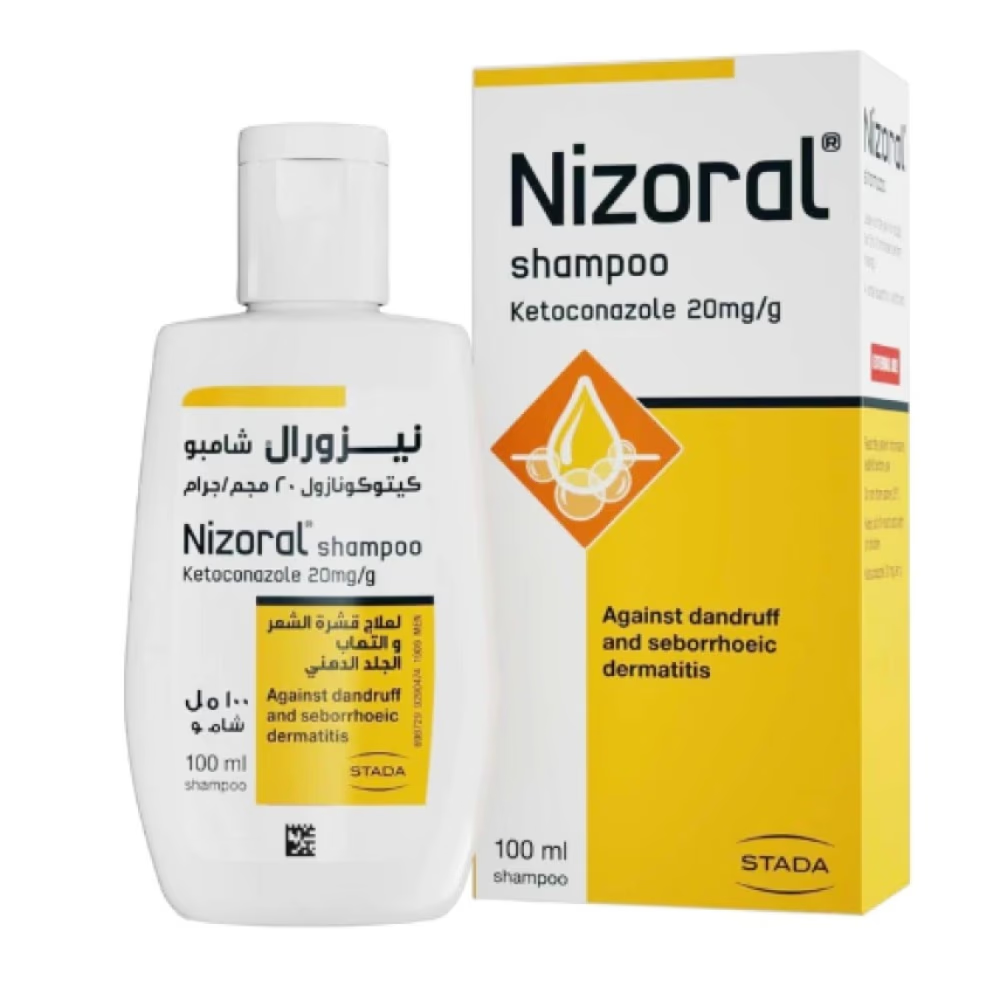
Dandruff is not caused by a dry scalp. It is usually an overgrowth of a yeast-like fungus called Malassezia that lives on everyone's skin. That is why cycling through shampoo after shampoo often changes nothing. If the active ingredient does not target the fungus, it just rinses away flakes that come straight back.
If you have tried two or three anti-dandruff shampoos with no real result, the problem probably is not your routine. It is that the shampoo had the wrong active ingredient for what is actually happening on your scalp. Here is what causes dandruff, and exactly which ingredient matches your scalp so you can stop guessing.
What Causes Dandruff? (It's Not a Dry Scalp)
Dandruff is a common scalp condition caused mainly by an overgrowth of Malassezia, a yeast-like fungus that lives naturally on everyone's skin. When it multiplies too much, it irritates the scalp and speeds up skin cell turnover, which produces the white or yellowish flakes and the itching you see.
This is the part most people get wrong. A dry scalp and dandruff look similar, but they are not the same. Dry scalp flakes are small, white, and come with tight, dry skin. Dandruff flakes are larger, oilier, and often yellowish, and the scalp underneath can feel greasy rather than dry. A moisturizing shampoo helps a dry scalp. It does little for dandruff, because dandruff is a fungal issue, not a hydration one.
Malassezia feeds on the oil your scalp produces, so oilier scalps and warm, humid conditions tend to make dandruff worse. That matters in the UAE climate, where heat and sweat give the fungus more to work with.
What Ingredients Actually Get Rid of Dandruff?
Five active ingredients do the real work in anti-dandruff shampoos: zinc pyrithione, selenium sulfide, ketoconazole, salicylic acid, and coal tar. Most target the Malassezia fungus directly. The rest clear the buildup that lets it thrive. Matching the right one to your scalp is what separates a shampoo that works from another wasted bottle.
Ingredient | How it works | Best for | Notes |
Zinc pyrithione | Antifungal and antibacterial, curbs Malassezia | Mild to moderate, oily scalps | Gentle enough for regular use |
Selenium sulfide | Slows fungal growth and cell turnover | Oilier scalps, visible flaking | The active in medicated lines like Selsun Blue |
Ketoconazole | Strong antifungal | Stubborn dandruff that resists other shampoos | Comes in an OTC strength and a stronger prescription version |
Salicylic acid | Exfoliates and lifts away scale | Flaky scalps with thick buildup | Often paired with an antifungal so it can reach the skin |
Coal tar | Slows skin cell turnover | Severe, psoriasis-like flaking | Strong smell, usually used under a dermatologist |
The five anti-dandruff actives, and the scalp each one suits.
Which Ingredient Is Right for Your Scalp?
Match the ingredient to your scalp, not to the brand on the bottle. An oily scalp with visible flakes responds best to zinc pyrithione or selenium sulfide. Dandruff that refuses to clear needs ketoconazole. Thick, scaly buildup calls for salicylic acid. Severe, inflamed, psoriasis-like flaking is a job for coal tar and a dermatologist.
Oily scalp
If your scalp gets greasy and you see flakes, start with zinc pyrithione or selenium sulfide. Both curb the fungus that thrives on scalp oil, and selenium sulfide in particular suits an oilier scalp.
Stubborn or persistent dandruff
If you have used a regular anti-dandruff shampoo consistently and the flakes still come back, step up to ketoconazole. It is the strongest antifungal in the category and the usual next move when milder actives fall short.
Flaky with thick buildup
If the flaking comes with thick scale or product buildup, salicylic acid exfoliates the dead skin so an antifungal can actually reach your scalp. Many shampoos combine the two in one bottle.
Severe or psoriasis-like
If the flaking is heavy, the scalp is red and inflamed, or it looks more like defined patches than loose flakes, that points toward coal tar and a proper diagnosis. See a dermatologist before self-treating this one.
The Anti-Dandruff Shampoo to Use (and the Non-Medicated Alternate)
For most people with an oily scalp and stubborn flakes, a medicated shampoo like Selsun Blue with a 1% selenium sulfide formula is a solid starting point. It targets the fungus rather than just masking the flakes. Use it two to three times a week, leave it on for a few minutes so the active can work, then rinse. If you want to compare actives side by side, MedX's anti-dandruff range carries selenium sulfide, zinc pyrithione, and ketoconazole options across several brands, so you can match the ingredient to your scalp rather than guess.
Not everyone needs a medicated shampoo. If your flaking is mild and tied to a dry, frizz-prone scalp rather than true dandruff, a gentler cosmetic shampoo like L'Oreal Everpure may be enough. If frizz is the bigger issue, here's what actually helps covers that side of hair care properly.
Is It Dandruff or Something Else?
Sometimes what looks like dandruff is something else. Seborrheic dermatitis is a more intense, inflamed version of the same fungal process, with redness and greasy yellow scale that can spread beyond the scalp to the eyebrows or the sides of the nose. Scalp psoriasis shows up as thick, silvery, well-defined patches. A simply dry scalp flakes lightly, without the grease or the redness.
Dandruff itself has no permanent cure. The fungus is always on your skin, so the goal is control, not elimination. A good shampoo keeps it in check, and flaking usually returns if you stop using it entirely. That is normal, and it is not a sign the shampoo failed. If flaking, redness, or itching does not improve after 2 to 4 weeks of consistent use, or the scalp looks inflamed rather than just flaky, see a dermatologist. It may be seborrheic dermatitis, psoriasis, or a fungal infection that needs a different treatment.
How Long Does Anti-Dandruff Shampoo Take to Work?
Give it two to four weeks of consistent use. Most anti-dandruff shampoos start reducing flakes within a couple of weeks when you use them two to three times a week and leave them on long enough for the active to work. If nothing has changed after a month of steady use, the ingredient is probably wrong for your scalp, or the issue is not simple dandruff. That is the point to switch actives or see a dermatologist.
Frequently Asked Questions
Is dandruff caused by a dry scalp?
No. Dandruff is usually caused by an overgrowth of Malassezia, a fungus that lives on the scalp, not by dryness. Dry scalp and dandruff look similar, but dry scalp gives small white flakes with tight skin, while dandruff gives larger, oilier, often yellowish flakes on a greasy scalp.
Which anti-dandruff ingredient works best?
There is no single best one, it depends on your scalp. Zinc pyrithione and selenium sulfide suit oily scalps, ketoconazole handles stubborn dandruff, salicylic acid clears thick buildup, and coal tar is reserved for severe, psoriasis-like cases under a dermatologist.
Is dandruff the same as seborrheic dermatitis?
They are related. Seborrheic dermatitis is a more severe, inflamed form of the same fungal process, with redness and greasy yellow scale that can spread beyond the scalp. Plain dandruff is milder, mostly flaking and itching without much redness. Persistent, inflamed cases should be seen by a dermatologist.
How often should you use anti-dandruff shampoo?
Two to three times a week is typical for a medicated shampoo, leaving the lather on for a few minutes so the active ingredient can work. Once your dandruff is under control, many people drop to once a week to keep it in check, since the fungus returns if you stop entirely.
Can dandruff be cured permanently?
No. Dandruff has no permanent cure, because the fungus behind it lives on everyone's skin. It can be controlled well with the right shampoo, but flaking tends to return if you stop treatment, so ongoing management is the realistic goal.
Why does my dandruff keep coming back?
Usually one of two reasons. Either the shampoo has the wrong active ingredient for your scalp, or you stopped using it once things improved and the fungus rebounded. Match the ingredient to your scalp type, and keep using it at a maintenance frequency.
Stop Guessing, Start Matching
Dandruff is not a hopeless case, and it is not a sign you need to keep buying random bottles. It is a fungal problem with a specific fix, and the fix depends on your scalp. Oily and flaky points to zinc pyrithione or selenium sulfide, stubborn points to ketoconazole, and scaly buildup points to salicylic acid. Work out which one matches your scalp, give it a few weeks, and see a dermatologist if it does not settle. Once you know your ingredient, choosing the right shampoo is the easy part.
all blogs