


When to Take a Pregnancy Test: Timing by Cycle Day (and the Right Kit for Each Stage)
Jul 20, 2026
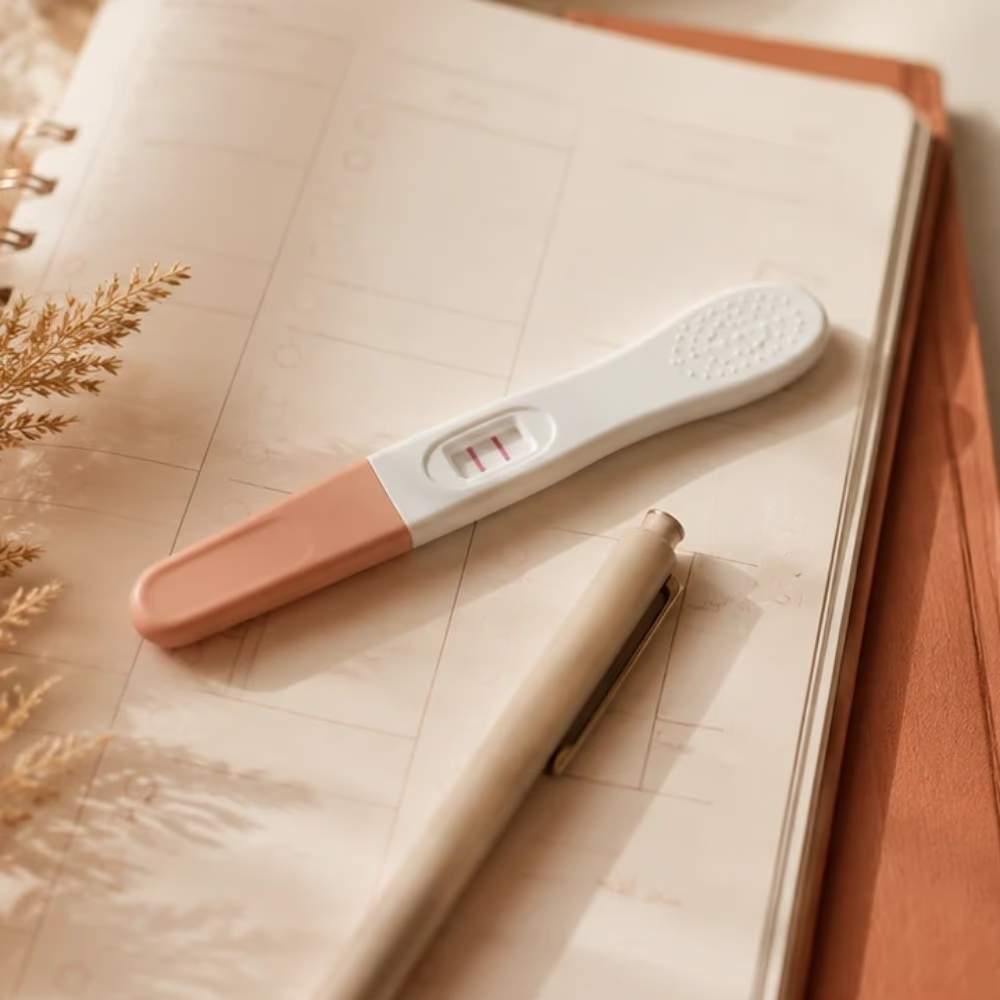
If your period is late and you're holding a test box wondering whether today is too soon, the short answer is that it depends on which test you're holding. The earliest a home pregnancy test can reliably catch a pregnancy is around 8 days after ovulation, roughly 6 days before your period is due. You only get that head start with an ultra-sensitive test, though. A standard strip misses it. A 6-day-early test like First Response's Early Result kit is built to detect those first traces, while a basic test is meant for the day your period is due or later.
So the real question isn't just when, but when and with which test. Get those two right together and you avoid the thing every woman dreads here, a false negative that sends you back to the shop for a second kit and another round of waiting.
A pregnancy test is a diagnostic device that detects human chorionic gonadotropin, or HCG, the hormone your body starts producing once a fertilised egg implants in the uterus. A home urine test reads the hCG in your sample and shows a positive or negative result within minutes. A blood test, done by a doctor, measures the exact hCG level in a lab. The timing rules work the same way for every brand, so once you understand how hCG builds up, matching the right test to your day gets simple. If you want a plain breakdown of the different kit types before you buy, here's how pregnancy tests work and which kit to buy.
What's the Earliest Day You Can Take a Pregnancy Test?
The earliest reliable day is about 8 days after ovulation, which for most cycles lands around 6 days before a missed period. Even then, only the most sensitive tests can pick up the small amount of hCG present that early. Test sooner than that and you'll usually see nothing, whether or not you're pregnant. Here's why the day carries so much weight. After ovulation, if an egg is fertilised, it travels to the uterus and implants around 6 to 10 days later. Your body only begins releasing hCG after implantation, and the level starts low. It takes a few more days to build to a concentration a home test can read. So the countdown that matters runs from ovulation and implantation, not from the day you had sex.
According to UT Southwestern Medical Center, the most sensitive home tests can detect hCG as early as roughly 8 days post-ovulation. That's the floor. For most women, waiting a little past it trades a few days of impatience for a result they can actually trust.
Does First-Morning Urine Actually Matter?
Before a missed period, yes. First-morning urine is the most concentrated of the day, so hCG sits at its highest readable level, which is exactly the edge you want while the hormone is still low. Once your period is late, hCG has usually climbed high enough that any time of day works fine.
Think of it like tasting a pot of soup as it cooks. Early on the flavour is faint, so you want the most concentrated spoonful to judge it. Later it's rich enough that any spoonful tells you the same thing. If you're testing early, use your first urine of the morning and go easy on water beforehand, since a lot of fluid dilutes the sample and can hide a low hCG level. Clearblue makes the same point about early testing rewarding a concentrated sample.
What Happens If You Test Too Early?
You risk a false negative, where the test reads negative even though you are pregnant. It happens because your hCG level simply hasn't risen high enough for the test to detect yet, not because there's no pregnancy. In early pregnancy, hCG roughly doubles every 2 to 3 days, so a single day or two can be the difference between an invisible result and a clear line.
This is the trap that causes the most second-guessing. hCG rises faster in some pregnancies than others, so if today's test is negative and your period still hasn't come, the likeliest explanation is that hCG hasn't caught up yet, not that you aren't pregnant. Wait 2 to 3 days and retest with first-morning urine. If you want to see how much sensitivity actually separates one kit from another this early, how early detection tests actually compare breaks it down test by test.
How Soon After a Missed Period Should You Test?
The day your period is due is the sweet spot. By then most pregnancies produce enough hCG for a sensitive test to read over 99% accurate. First Response's Early Result kit, for one, is over 99% accurate from the day of your expected period. You don't need first-morning urine at this stage, and you don't need to wait for a particular time of day. If you tested early and got a negative, the day of your missed period is the moment to test again with confidence. Most women who wait until this point get a clear answer on the first try.
My Cycle Is Irregular. When Should I Test?
Count from ovulation or unprotected sex, not from a period you can't predict. When your cycle length jumps around, waiting for your missed period stops being useful, because you don't have a reliable due date to wait for. Instead, count about 3 weeks from the last time you had unprotected sex, which covers the time needed for implantation and a readable hCG level in most cases. If irregular cycles are just how your body works, tracking ovulation takes the guesswork out of timing. Tracking ovulation with an LH strip test shows you when you actually ovulate, which gives you a real day to count from instead of a calendar guess. Once you know your ovulation day, the same 8-day floor applies to you as to anyone else.
Which Pregnancy Test Fits Your Timing?
Match the test to where you are in your cycle today. Testing early, before your period is due, calls for an ultra-sensitive kit. Already missed your period? Accuracy is high across the board, and a simpler test does the job just as well.
When You're Testing | How Likely It Is to Detect Pregnancy | Which Test to Use |
6 days before your missed period (about 8 days after ovulation) | Possible, but only with an ultra-sensitive test. hCG is still very low. | First Response Early Result |
3 to 4 days before your missed period | More likely as hCG climbs, still best read with a sensitive test. | First Response Early Result |
The day your period is due | High, over 99% accurate with a sensitive test. | Either kit works well here. |
A week or more after a missed period | Very high. hCG is well above the detection threshold. | Any accurate test, including Novamed Midstream. |
For early testing, First Response's Early Result kit is the sensible pick, since it's built to detect hCG up to 6 days before your missed period. If your period is already late, a straightforward strip test like Novamed's Midstream kit is accurate and easy to use. You hold the strip in your urine stream and it shows a positive in about 40 seconds, with a full negative reading confirmed at 5 minutes. For the many women who test on or after the day their period was due, that's all the test you need.
Both kits are available for delivery across the UAE from MedX, so you can match your test to your day without heading out to a pharmacy while you're already on edge.
Frequently Asked Questions
How accurate is a pregnancy test on the day of my missed period?
Very accurate. A sensitive home test reads over 99% accurate from the day your period is due, because hCG has usually reached a clearly detectable level by then. Test earlier than that and accuracy drops, so a negative result before your missed period is always worth rechecking.
Can I take a pregnancy test at night?
After a missed period, yes. hCG is high enough by then that any time of day works. If you're testing early, before your period is due, use first-morning urine instead. An evening test on an early day can read negative just because your urine is more diluted.
What does a faint line on a pregnancy test mean?
A faint line usually still counts as positive. It means hCG is present but low, which is common when you test early. Retest in 2 to 3 days and the line should darken as hCG rises. Confirm a positive result with your doctor to be sure.
What should I do if the test is negative but my period still hasn't come?
Retest in 2 to 3 days with first-morning urine, because hCG may not have risen enough to show yet. If you keep getting negatives and your period still hasn't arrived, see a doctor, since things other than pregnancy can delay a period.
Can drinking a lot of water cause a false negative?
It can, especially early on. Drinking large amounts before you test dilutes your urine and lowers the hCG concentration the test reads. This matters most before a missed period. First-morning urine, with no water-loading beforehand, gives the most reliable early result.
Do I need a blood test to confirm a home test result?
Not to get an answer at home. A blood test done by your doctor measures the exact hCG level and can confirm a pregnancy earlier and more precisely than a urine test. Use a home test first, then confirm a positive with a healthcare provider.
How much earlier can First Response detect pregnancy than a regular test?
Up to 6 days earlier. The Early Result kit is designed to pick up low hCG as early as 6 days before your missed period, while a standard test is built for the day your period is due or later. That head start is the whole reason to reach for the sensitive kit when you're testing early.
Which Test, Which Day
You don't have to guess. When to take a pregnancy test comes down to matching the test to your day. Use an ultra-sensitive kit if you're testing before your period is due, and a simpler accurate strip once you've missed it. Work out where you are in your cycle today, pick the test built for that point, and you get an answer you can trust the first time. Both options are a tap away for UAE delivery from MedX, so you can test on the right day with the right kit instead of waiting and wondering.
all blogs