


Nebulizer Buying Guide: Compressor vs Portable, and How to Choose
Jun 24, 2026
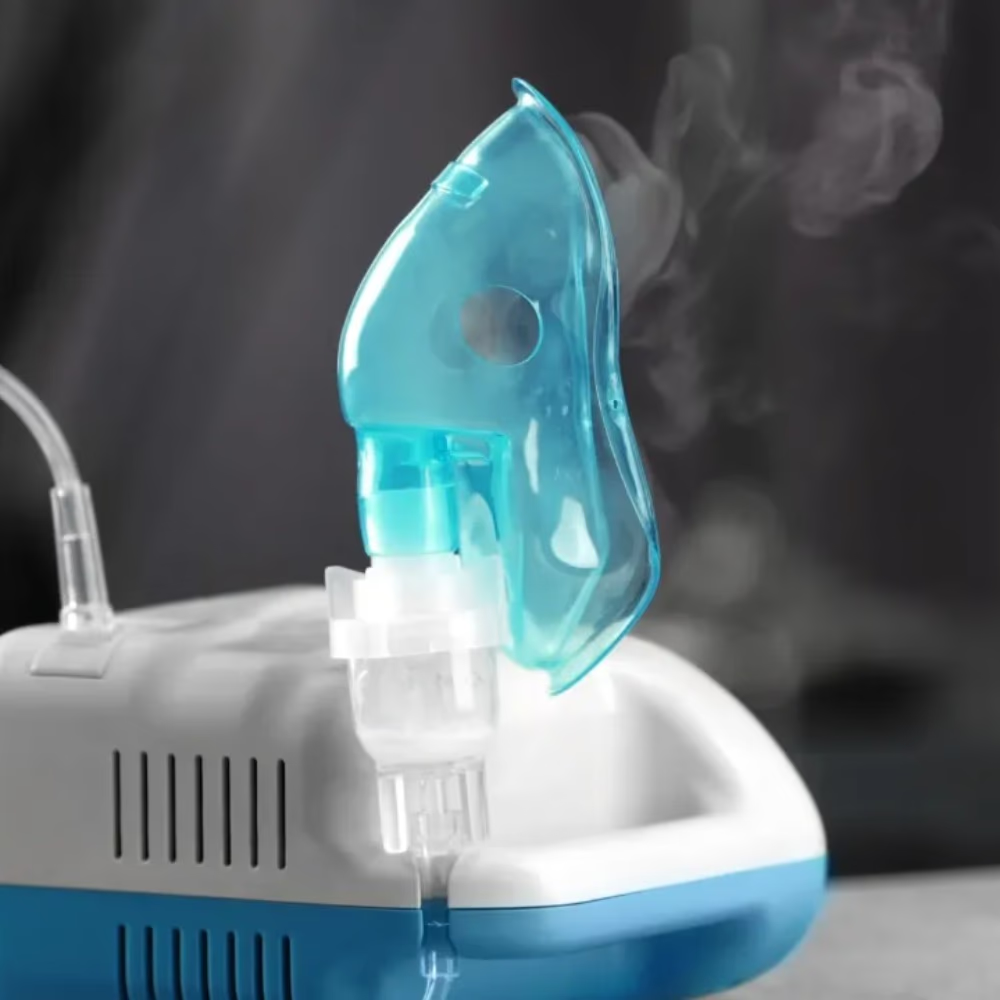
Choosing a nebulizer comes down to who will use it and where, not how powerful the machine is. A compressor (jet) nebulizer is the reliable, affordable choice for daily home use. A portable model is quieter and easier to travel with, but it costs more. Both deliver the same prescribed medicines into the lungs. Here is how to pick the right one, and what safely goes in the cup.
Compressor or portable nebulizer: which should you buy?
Buy a compressor nebulizer if you want a dependable, budget-friendly machine for regular home use and you do not mind some noise and a mains plug. Buy a portable nebulizer if you need something quiet, compact and battery or USB-powered for travel or for a child at night. Both turn the same prescribed liquid into a breathable mist, so neither is a downgrade. The right one is simply the one that matches your routine.
Most UAE families do well with a home compressor nebulizer like the B.Well PRO-110 as the main device, adding a portable model later only if you travel often or have a restless toddler who needs treating without waking the house. Start with the machine you will use most, not the one with the longest spec list.
How does a nebulizer work, and what are the types?
A nebulizer is a device that turns liquid medicine or sterile saline into a fine mist you breathe into your lungs through a mask or mouthpiece. It is used for asthma, COPD, bronchitis and other respiratory conditions, mainly for young children, severe flare-ups, or anyone who cannot use an inhaler well. The mist has to be fine enough to reach the airways, and that fineness is measured as particle size.
Particles between roughly 1 and 5 microns reach the lower airways where the medicine needs to land. Larger droplets settle in the mouth and throat and do little good. That is the one spec worth caring about, and it is where the three machine types differ.
Compressor (jet) | Portable (mesh / compact) | |
Noise | Louder, a steady hum | Quiet, good for night and babies |
Power | Mains plug only | Battery or USB, works anywhere |
Size | Bench-top, stays at home | Pocket or palm size |
Speed | Fast, treats in minutes | Slightly slower on some models |
Medication | Handles all prescribed solutions | Handles most, check thicker meds |
Price feel | Lower, the budget workhorse | Higher for a good model |
Best for | Daily home use, whole family | Travel, quiet use, bedside |
Compressor or jet models push air through the liquid to create the mist, and they are the workhorse of home care. Mesh models vibrate a fine membrane to make the mist, which makes them quiet and pocketable. Ultrasonic models use sound waves and are less common, and they are not suitable for some medicines. For most homes the real choice is compressor versus a portable mesh-style device.
Which nebulizer is best for a child, for asthma, or for the whole family?
Match the device to the person who will use it most. For a young child or for night-time dosing, a quiet portable model wins, because a calm child breathes the mist properly and a screaming one does not get the full dose. For an adult or a whole family using it regularly at home, a mains compressor is the better value and rarely needs charging.
Whatever you choose, the mask size matters. A child needs a snug child-sized mask that covers the nose and mouth, while an adult can use a mask or a mouthpiece. A mouthpiece actually delivers a little more medicine to the lungs than a mask, so older children and adults who can hold it steady should use one. The PRO-110 comes with both adult and child masks plus a mouthpiece, which covers a mixed-age household in one kit.
What medicine goes in a nebulizer?
Only what your doctor prescribes, plus sterile saline. The medicine that goes in a nebulizer, and its dose, is decided by your doctor, not by the box and not by a website. The one thing you can use without a prescription is sterile 0.9% saline, which is used on its own to loosen mucus or to thin a prescribed medicine. Everything else needs a prescription.
The prescribed medicines fall into a few broad groups, such as bronchodilators that open the airways and inhaled steroids that reduce inflammation. We are naming the categories so you recognise them, not telling you what to take. Which drug, which strength and how often is a clinical decision your doctor makes for your specific condition. If you are unsure what you have been prescribed or how to set it up, a MedX pharmacist can talk you through your own prescription.
What should you never put in a nebulizer?
Never put anything in a nebulizer except sterile saline and the medicine your doctor prescribed. This is the rule that the box and the marketing usually leave out, and it is the most important safety point on this page. Some of the most common home mistakes can do real harm.
Never put any of these in a nebulizer:
Only sterile 0.9% saline and the medicine your doctor prescribed belong in the cup. Everything else can damage your lungs, cause infection, or break the machine. |
Essential oils and vapour rubs can cause a serious lung inflammation called lipoid pneumonia. Tap, distilled and bottled water are not sterile and are the wrong salt balance for your airways, so they can irritate the lungs and even introduce bacteria like Legionella. Crushed tablets are never designed to be inhaled and can block the device or harm the lungs. If it did not come from a pharmacy as a nebulizer solution, it does not go in the cup.
How do you use and clean a nebulizer safely?
Sit upright, pour in the prescribed medicine, fit the mask or mouthpiece, and breathe normally until the mist stops, usually around 5 to 15 minutes. Sitting up helps the mist reach the lungs rather than the throat. If you use an inhaled steroid, rinse your mouth afterwards to avoid irritation.
Cleaning is not optional, because a damp, dirty nebulizer grows bacteria and mould and can turn a treatment into an infection. The routine is simple once you know it.
When | What to do |
After every use | Wash the cup, mask and mouthpiece in warm soapy water, rinse, and air-dry on a clean towel. |
Never | Wash or submerge the tubing or the motor unit. Wipe the outside only. |
Once a week | Soak the washable parts in one part white vinegar to three parts water for about 30 minutes, then rinse and air-dry. |
Every 3 to 6 months | Replace the mask, mouthpiece and medicine cup. |
About every 6 months | Replace the air filter, or sooner if it looks grey or dirty. |
Always | Use one mouthpiece per person. Never share between family members. |
The one thing people get wrong is the tubing. Never wash or soak the tubing or the motor unit, because trapped moisture inside the tube is exactly what breeds bacteria. Keep them dry, wipe the outside, and replace the tubing if water ever gets in.
Do you actually need a nebulizer, or is an inhaler enough?
For most everyday asthma, an inhaler used with a spacer is just as effective as a nebulizer and a lot faster. This is the honest part a shop will not tell you. A nebulizer earns its place for very young children who cannot coordinate an inhaler, for severe flare-ups, and for people who genuinely struggle with inhaler technique. If you are not sure which camp you are in, your doctor will tell you.
One line to keep in mind whatever device you own. Some symptoms are an emergency, not a nebulizer moment. Severe breathlessness, blue or grey lips, chest pain, or rescue medicine that is not working mean you call for urgent medical help immediately, not reach for the machine.
Which nebulizer should you buy in the UAE?
For most homes, a mains compressor is the right first device, and the B.Well PRO-110 is the hero pick here. It delivers a fine mist at about 3.16 microns with a respirable fraction over 70%, treats quickly at 0.4 mL per minute, and comes with adult and child masks plus a mouthpiece, so it suits a whole household. It is built for daily use and stays on the shelf ready to go. Check the current price on MedX rather than guessing from a marketplace listing.
If you need something for travel or quiet bedside use, the compact, USB-powered B.Well MED-120 is the portable-leaning pick in the range. It is a small USB compressor rather than a pocket mesh device, but it runs quieter, produces an even finer 2.9-micron mist, and fits in a bag, which makes it the better second device for a family on the move.
Wherever you buy, buy genuine from a licensed pharmacy and get your medicines on prescription. A real device from a regulated source means working parts, proper filters and a pharmacist you can ask, which is the quiet advantage of a pharmacy over a marketplace.
A nebulizer is one piece of a home health kit. It is worth pairing it with the right thermometer for the sick-day kit, and if you are setting up the wider household, choosing a home blood pressure monitor tends to be the next device families add.
Frequently asked questions
Is a portable nebulizer as good as a compressor?
For most uses, yes. A good portable nebulizer delivers the same prescribed medicine as a compressor, just more quietly and on the move. The trade-off is price and, on some models, a slightly slower treatment. A compressor still wins on value for heavy daily home use.
How long does a nebulizer treatment take?
Usually 5 to 15 minutes, until the mist stops and the cup runs dry. Sit upright and breathe normally through the whole session for the full dose. If it is taking much longer than usual, the cup or filter may need cleaning or replacing.
Can I use a nebulizer with just saline?
Yes, sterile 0.9% saline is the one solution you can use without a prescription, to loosen mucus or ease a dry cough. Use only pharmacy-bought sterile saline, never homemade salt water or tap water. For anything beyond saline, you need a prescribed medicine from your doctor.
How often should I replace nebulizer parts?
Replace the mask, mouthpiece and medicine cup every 3 to 6 months, and the air filter about every 6 months or sooner if it looks dirty. Worn parts make treatments slower and less effective. Wash the reusable parts after every single use in between.
Can babies and toddlers use a nebulizer?
Yes, with a properly fitted child-sized mask and only the medicine a doctor has prescribed. A quiet device helps, because a calm child breathes the mist in properly while a crying one does not get the full dose. Always follow your paediatrician's instructions for a young child.
Can I put my inhaler medicine into a nebulizer?
No. Inhaler canisters and nebulizer solutions are different products and are not interchangeable. Use only the liquid nebulizer medicine your doctor prescribed. If you are unsure what to use in your device, ask your doctor or a MedX pharmacist before you start.
How loud is a nebulizer?
A compressor makes a steady hum that some children find startling, which is why portable models are sold as quieter. If night-time dosing or a nervous child is your main worry, choose a low-noise portable device for the bedroom and keep a compressor for daytime use.
The bottom line
The best nebulizer is the one that fits the person using it and gets cleaned properly, not the most powerful machine on the shelf. A compressor like the PRO-110 covers daily home use for a whole family, while a compact USB model suits travel and quiet bedside dosing. Remember the two rules that keep it safe: only sterile saline and prescribed medicines go in the cup, and a clean device is a safe one. If you are unsure which fits your family, ask a MedX pharmacist, and get your medicines on prescription.
Reviewed by a MedX pharmacist. This article is general information about choosing and caring for a nebulizer device. Your doctor decides your medicines and your treatment plan. Seek urgent care for severe breathlessness, blue or grey lips, or chest pain.
all blogs