


Digital vs Infrared Thermometers: Which to Buy for Your Family
Jun 30, 2026
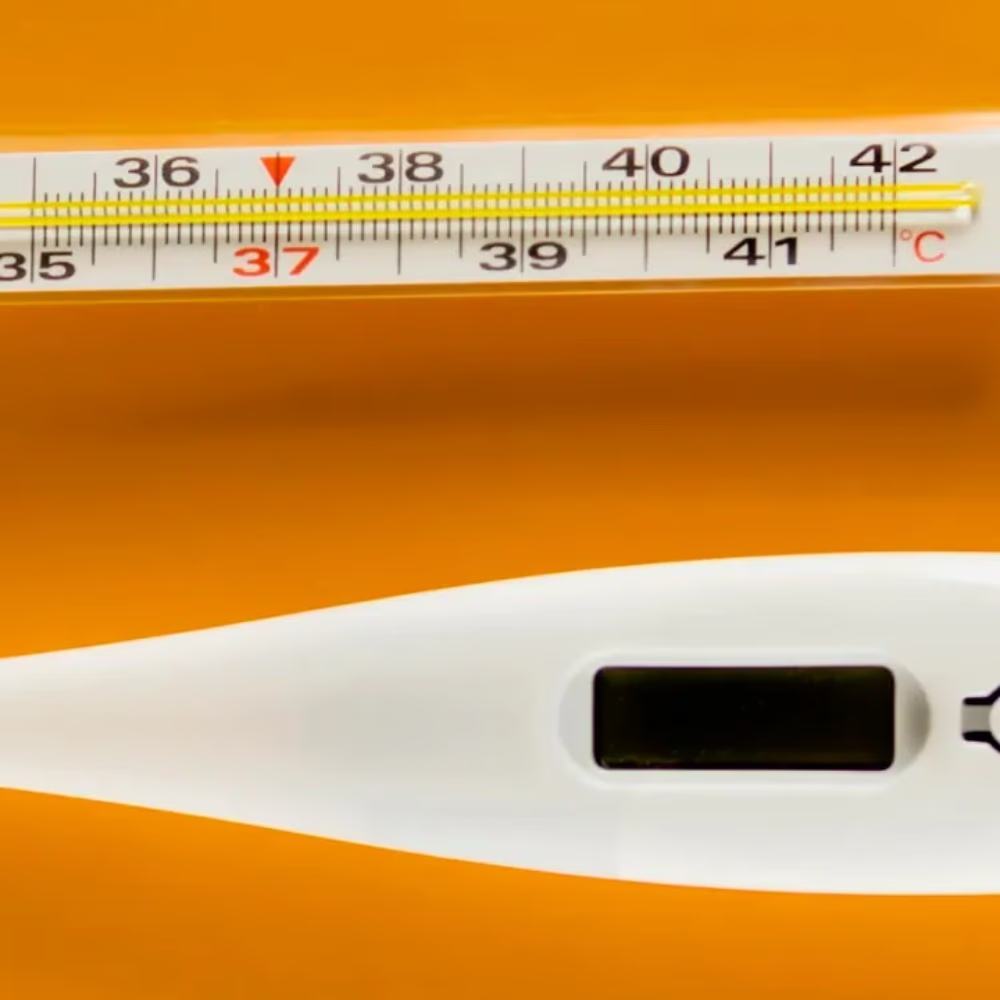
For most families, a digital contact thermometer is the one to trust for an accurate reading, and an infrared no-touch thermometer is the one for fast, fuss-free checks. Which you reach for depends mostly on your child's age. A reliable digital contact thermometer like the B.Well WT-03 covers the reading that actually changes what you do next, and below you get the pharmacist's age-by-age rule along with the honest accuracy line most product pages leave out.
Digital or infrared thermometer: which is more accurate?
A digital contact thermometer is more accurate than an infrared one because it reads temperature directly at a core site, your mouth, armpit or rectum, instead of estimating it from skin. Infrared thermometers read surface heat off the forehead or inside the ear. They are faster and cleaner, but more sensitive to how you hold them. When the number will decide whether you medicate or call a doctor, take a contact reading.
A medical thermometer is a device that measures body temperature to check for fever. The two types families actually choose between are digital contact thermometers, which read by touch at the mouth, armpit or rectum, and infrared thermometers, which read without contact from the forehead or ear. The old mercury-in-glass stick has been retired from the home, and for good reason: a broken one releases a toxic metal.
How does each type actually work?
The difference comes down to contact versus radiation. One touches you and waits. The other reads the heat you give off.
Digital contact
A digital thermometer has a metal sensor tip you place against the body. It reads the heat conducted into that tip and beeps when the number settles, usually in about a minute. You can use it three ways, under the tongue, tucked in the armpit, or rectally for a baby. The rectal route reads closest to true core temperature, which is why it stays the standard for the youngest infants.
Infrared no-touch and ear
An infrared thermometer measures the heat your body radiates rather than touching a core site. A temporal artery model scans across the forehead, while a tympanic model reads the eardrum inside the ear canal. Both give you a number in a second or two without waking a sleeping child or passing germs from one mouth to the next. The trade-off is that surface readings drift if the skin is sweaty, cold, or measured at the wrong distance.
Digital (contact) | Infrared (no-touch) | |
Accuracy | Highest, reads a core site by touch | Good for screening, drifts with technique |
Speed | About 60 seconds | One to two seconds |
Where it reads | Mouth, armpit or rectum | Forehead or ear |
Hygiene | Needs cleaning. Keep oral and rectal devices separate | No skin contact, easy between people |
Best for | The reading you will act on, and babies | Fast checks and sleeping children |
Price feel | Lower, usually the budget pick | Higher for a good no-touch model |
Which thermometer is best for my child's age?
This is the question that actually settles the purchase, and it is the one most UAE pages skip. Pediatric guidance from Mayo Clinic, the American Academy of Pediatrics and Johns Hopkins lines up cleanly on it, so here is the rule in one table.
Age | Thermometer to trust |
Under 3 months | Digital contact, rectal. This is the most accurate reading for a baby. A no-touch forehead device works as a quick screen, but confirm anything that looks like a fever rectally. |
3 to 6 months | Digital contact, rectal or armpit. |
7 months to 3 years | Digital contact, rectal or armpit. Ear (tympanic) readings become reliable from around 6 months. |
4 years and up | Digital contact under the tongue, once the child can hold it with a closed mouth. Ear or forehead for quick checks. |
Adults and 65+ | Oral digital, or any validated method used consistently. |
The pattern is simple. The younger the child, the more you want a contact reading, and rectal is the most accurate site for a baby under three months. Ear readings only become reliable from around six months, once the ear canal is large enough to aim into. Oral readings work from about age four, when a child can hold the tip under the tongue with a closed mouth. A no-touch forehead thermometer is fine as a quick screen at any age, but for an infant you confirm anything that looks like a fever with a contact reading.
What counts as a fever, and when should you worry?
A fever is a body temperature of 38°C (100.4°F) or higher, measured at a reliable site. A normal reading sits around 37°C, and small swings across the day are ordinary, with temperatures usually running a little lower in the morning and higher by evening.
One situation is not ordinary, and it overrides every convenience argument on this page. A baby under three months old with a temperature of 38°C or higher needs same-day medical attention. Do not wait to see how the night goes, and do not rely on a forehead reading alone. Confirm with a rectal contact reading if you can, then get the infant seen by a doctor that day. For older children, a fever is usually the body doing its job, so you watch how the child looks, drinks and behaves more than the exact number on the screen.
Why do I get different readings?
Two readings from the same person can disagree by a degree or more, and that is normal, not a faulty device. The cause is almost always the measurement site or the conditions around it.
Forehead and armpit readings run lower than rectal and oral ones, so a 37.5°C armpit reading is not the same as 37.5°C taken rectally. Sweat, a cold room, or direct sun will pull an infrared forehead reading down, and earwax or poor positioning skews an ear reading. If you have just come indoors from the heat, or eaten or drunk something, wait about 15 minutes before taking a temperature.
The fix is to compare like with like. Pick one method for tracking a fever, note the site each time, and stick with it through the illness. You will see the real trend instead of chasing noise from device to device.
Digital vs infrared: which should you buy in the UAE?
If you buy one thermometer, make it a digital contact model. It gives you the reading you will actually act on, suits every age from newborn to grandparent, and costs less than most no-touch guns. The WT-03's 60-second reading and fever alarm make it a sensible everyday pick, and being mercury-free and waterproof, it cleans easily between uses. Check the current price on MedX rather than assuming the most expensive option is the most accurate.
Add an infrared model as the convenience layer if you want one. The no-touch speed earns its place for a sleeping baby or a squirming toddler, and for a fast screen before you confirm with a contact reading. You can browse the no-touch infrared options when speed matters more than the last decimal.
A thermometer is one piece of a small home kit. Pair it with a home nebulizer for the full sick-day kit so a chesty cough at midnight does not turn into a 2am pharmacy run.
If you are building that kit from scratch, our guide on how to choose a home nebulizer walks through the same buy-once, buy-right thinking applied to breathing devices.
The thermometer rarely travels alone. Plenty of families setting up a home kit also want picking a home blood pressure monitor for the adults in the house, since the two devices tend to get bought in the same trip.
And if anyone in the household tracks blood sugar, choosing a blood glucose monitor follows the same logic: buy the validated device once, and trust it.
Frequently asked questions
Is a no-touch forehead thermometer accurate enough for a baby?
For a quick screen, yes. For a decision, confirm it. A no-touch forehead reading is fine to check whether a baby feels warm, but for an infant under three months you verify any suspected fever with a rectal contact reading, because that is the reading a doctor will act on.
Do I really need to own two thermometers?
Most families do well with one good digital contact thermometer. A second infrared device is a convenience, not a requirement. The one case where you genuinely keep two is a baby in the house: keep a contact thermometer used only rectally, separate from the one used in mouths.
Can I use one thermometer for both oral and rectal readings?
No, keep them separate. Use one labelled digital thermometer for rectal readings and a different one for the mouth, to avoid moving germs between sites. Both can be the same model, just mark them clearly and never swap their jobs.
Are mercury thermometers still safe to use?
No. Mercury-in-glass thermometers are no longer recommended, because a broken one releases toxic mercury vapour. A digital thermometer gives you a faster, safer reading with no glass to shatter, which is why it has replaced mercury in homes and clinics.
How long should a digital thermometer take to read?
About 60 seconds for most models, and it beeps when the reading settles. A waterproof tip also lets you rinse it under the tap. Rushing it before the beep is one of the most common reasons a home reading comes out too low.
Why is my forehead reading lower than my armpit reading?
Because they measure different things. Forehead and armpit readings both run lower than core temperature, and a forehead scan drops further if the skin is cool, sweaty or read at the wrong distance. Track a fever with one site only, so the numbers stay comparable.
What is the most accurate thermometer for a newborn?
A digital contact thermometer used rectally. For a newborn under three months, that is the reading clinicians rely on, and a temperature of 38°C or higher taken this way means the baby needs to be seen by a doctor the same day.
The bottom line
The right medical thermometer is not the priciest or the most high-tech one. It is the one that matches your child's age and the moment you are in. Reach for a digital contact reading when the number will change what you do, keep an infrared model for fast screening, and the fever question is covered for the whole family. Get a trustworthy contact thermometer into your kit first, then build out from there.
Reviewed by a MedX pharmacist. This article is general information and does not replace medical advice. For a sick infant, or any fever you are worried about, consult a doctor.
all blogs