


Tretinoin Cream: Benefits, Results Timeline and How to Start Safely
Jun 23, 2026
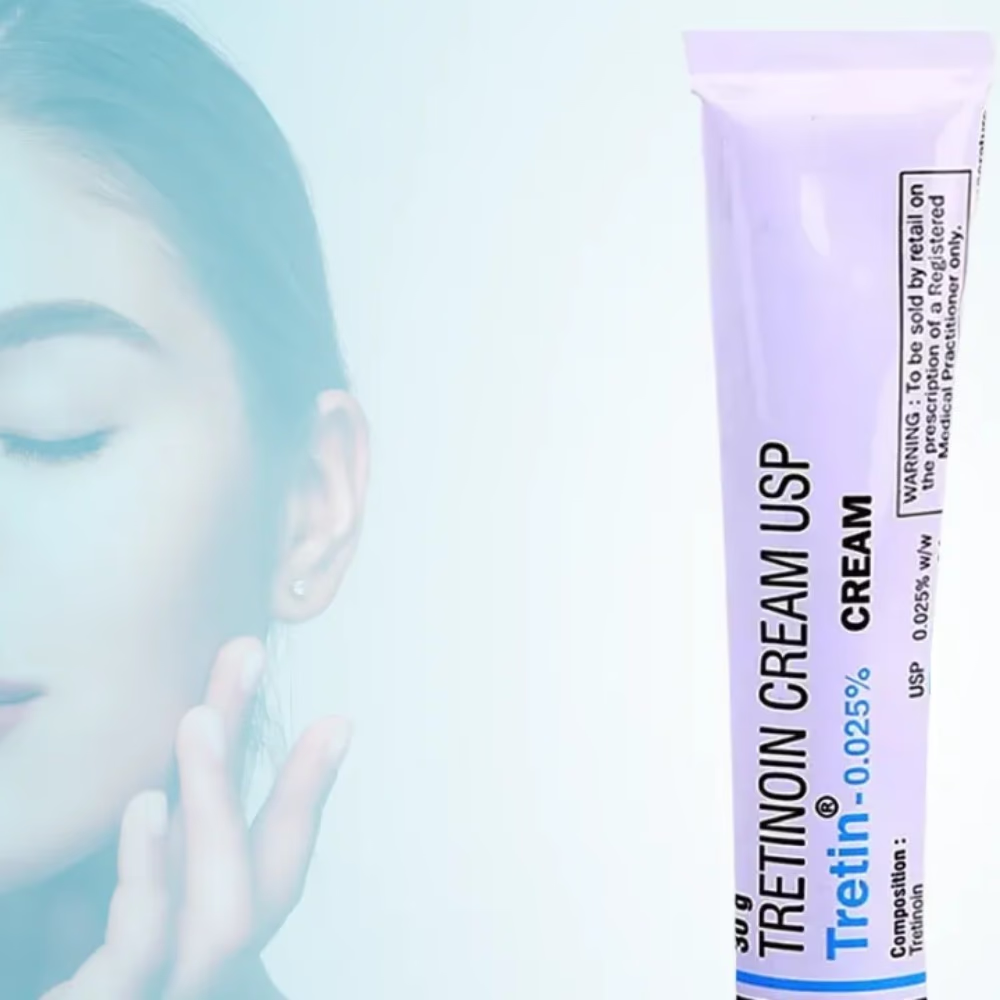
Tretinoin cream is a prescription vitamin A retinoid that treats acne, fine lines, and uneven tone by speeding up skin cell turnover. It works, but not overnight, and your skin can look worse before it looks better. Below is the realistic week-by-week timeline, the side effects to expect, and how to start safely in the UAE, where tretinoin is available by prescription only.
That last point matters more than most pages admit. A lot of online guides, and even Google's own AI summary, wrongly suggest you can grab tretinoin off the shelf. You cannot, not here. Getting the facts straight on what it does, how long it takes, and how to obtain it legitimately is the difference between a result you are happy with and a frustrated early quit.
What is tretinoin cream, and what does it do?
Tretinoin is a prescription-strength topical retinoid derived from vitamin A. Applied as a cream at night, it speeds up skin cell turnover and stimulates collagen, which clears acne, fades pigmentation, and softens fine lines over weeks of consistent use. In the UAE it is available by prescription only.
Unlike over-the-counter retinol, which your skin has to convert before it works, tretinoin is already in its active form. That is why it is stronger and faster, and also why it needs medical guidance to use well. The strength that gets results is the same strength that can irritate skin if you rush it.
What does tretinoin treat?
Tretinoin is used to treat acne, hyperpigmentation, and fine lines from sun damage, according to Mayo Clinic and MedlinePlus. It tackles all three through the same mechanism, faster cell turnover, which is why one cream covers concerns people often think need separate products.
- Acne: Clears existing breakouts and helps prevent new ones by keeping pores from clogging.
- Hyperpigmentation: Fades dark spots and post-acne marks as newer, more even skin surfaces.
- Fine lines and texture: Softens early lines and smooths rough texture over months of use.
If acne is your main concern, it is worth knowing tretinoin is one of several routes. See other acne treatment options for how spot gels, antibiotics, and scar creams fit alongside it.
How long does tretinoin take to work?
Most people see early changes around 2 to 3 weeks, with fuller results from 6 weeks and often up to 12 weeks of consistent nightly use, based on dermatology drug guidance. The first few weeks are the hardest, because skin is adjusting and may flare before it improves. Knowing the timeline in advance is what keeps people going through that dip.
Timeframe | What is happening | What you may see | What to do |
Weeks 1 to 2 | Skin begins adjusting (retinization) | Dryness, tightness, mild flaking | Use 2 to 3 nights a week, moisturise, daily SPF |
Weeks 2 to 6 | Cell turnover ramps up | Possible purge, breakouts may briefly worsen | Stay consistent, do not increase frequency yet |
Weeks 6 to 12 | Clearer skin and tone emerge | Fewer breakouts, smoother texture, brighter tone | Build toward nightly use if tolerated |
Week 12 and beyond | Collagen and texture benefits build | Softer fine lines, more even tone | Maintain nightly, keep wearing SPF |
The pattern is predictable, which is the point. The rough patch early on is not a sign it is failing. It is usually a sign it is working.
Is the "tretinoin purge" normal?
Yes, a temporary worsening of breakouts in the first few weeks is normal and is often called the tretinoin purge. As cell turnover speeds up, congestion that was already forming under the skin surfaces faster, so spots that would have appeared over weeks arrive together. This is the "my skin got worse before it got better" experience people describe, and it usually settles within a few weeks.
There is a line between a purge and genuine irritation, though. A purge happens where you normally break out and fades on schedule. If you get spreading redness, burning, or swelling in areas you do not usually break out, that is irritation, and you should ease off and speak to your doctor or pharmacist.
What are the side effects, and how do you manage them?
The common side effects of tretinoin are redness, dryness, peeling, and increased sun sensitivity, according to Mayo Clinic. They are most noticeable in the first weeks and ease as your skin builds tolerance. None of them mean the cream is harming your skin, but they do need managing so you stay consistent.
- Buffer with moisturiser: Apply a plain moisturiser after the cream, or even before it, to cushion the active.
- Go slow on frequency: If you are peeling, hold or reduce nights rather than pushing through.
- Wear sunscreen daily: Covered below, and it is non-negotiable.
Tretinoin makes skin more sensitive to sunlight. Wear a daily broad-spectrum sunscreen, which matters even more under the strong UAE sun.
Can you use tretinoin every day?
Not at the start. Begin with tretinoin 1 to 2 nights a week and build up to nightly only as your skin tolerates it, following your doctor's or pharmacist's guidance. Jumping straight to nightly is the most common beginner mistake and the fastest route to irritation that makes people quit.
Apply a pea-sized amount to clean, dry skin at night. More does not work better, it just irritates. Let skin dry fully after cleansing before applying, then moisturise.
Tretinoin vs retinol: which is right for you?
Tretinoin is stronger and faster than retinol, but it needs a prescription, while retinol is gentler and available over the counter. If you are brand new to retinoids, starting with retinol and stepping up later is often the more comfortable path. If you have stubborn acne or have already used retinol without enough result, tretinoin is the next level, with a doctor involved.
Tretinoin | Retinol | |
Strength | Stronger, already active | Milder, needs converting in skin |
Availability | Prescription only | Over the counter |
Best for | Stubborn acne, faster results under guidance | Beginners, gentler introduction |
If you are new to retinoids, start with a gentler retinol first, and see how retinal and retinol compare to understand the full ladder before moving up to prescription strength.
Which strength should you start with?
Most people start tretinoin at 0.025%, the standard beginner strength, and step up to 0.05% later only if a doctor agrees it is needed. Starting low lets your skin build tolerance with the least irritation. Strength is a decision to make with your prescriber, not something to push on your own.
For a full breakdown of how the two strengths differ and who each suits, see the full 0.025% vs 0.05% strength comparison. That guide covers the strength decision in depth.
Who should not use tretinoin?
Tretinoin must not be used during pregnancy, while planning a pregnancy, or while breastfeeding, because vitamin A retinoids carry a risk to a developing baby. This is a firm contraindication, not a cautious suggestion. If any of these apply to you, do not start tretinoin, and ask your doctor about safer alternatives.
Do not use tretinoin if you are pregnant, trying to conceive, or breastfeeding.
Topical retinoids are not considered safe in pregnancy. Ask your doctor about pregnancy-safe options such as azelaic acid instead.
Beyond pregnancy, tretinoin is not ideal for very sensitised or broken skin, eczema, or rosacea flares, and you should be careful combining it with other strong actives. A doctor or pharmacist can tell you whether your skin and your current routine are ready for it.
Do you need a prescription for tretinoin in the UAE?
Despite what some websites and even Google's AI summary claim, you cannot legitimately buy tretinoin off the shelf in the UAE. It is a prescription medication. The proper route is a short consultation with a doctor or a MedX pharmacist, who can confirm it suits your skin and set you up at the right starting strength.
Once you have a prescription, a starter-strength tretinoin like Acretin 0.025% is the sensible first step for most people, dispensed at MedX with a valid prescription. If your doctor later decides you are ready for more, you can step up to 0.05%. Prices are indicative, so check the current price on MedX, and treat the consultation as part of the cost of doing this safely.
FAQ
What is tretinoin cream used for?
Tretinoin cream is used to treat acne, hyperpigmentation, and fine lines from sun damage. It is a prescription vitamin A retinoid that speeds up skin cell turnover and stimulates collagen. In the UAE it is available by prescription only, so a doctor or pharmacist should guide your use.
How long does tretinoin take to work?
Most people see early changes around 2 to 3 weeks, with fuller results from 6 weeks and often up to 12 weeks of consistent nightly use. The first few weeks may bring dryness and a temporary purge before skin clears, so patience through the early dip is essential.
Is the tretinoin purge real?
Yes. A temporary worsening of breakouts in the first few weeks is normal and is often called the purge. As cell turnover speeds up, congestion already forming under the skin surfaces faster. It typically settles within a few weeks. Spreading redness or burning is irritation, not a purge.
What are the side effects of tretinoin?
Common side effects are redness, dryness, peeling, and increased sun sensitivity, especially in the first weeks. They ease as skin builds tolerance. Manage them with a moisturiser, a slower frequency, and a daily broad-spectrum sunscreen, which is essential under the UAE sun.
Can you use tretinoin every day?
Not at first. Start with 1 to 2 nights a week and build up to nightly only as your skin tolerates it, following your doctor's or pharmacist's guidance. Apply a pea-sized amount to clean, dry skin at night. Using more or going nightly too soon usually causes irritation.
Is tretinoin or retinol better?
Tretinoin is stronger and faster but needs a prescription, while retinol is gentler and available over the counter. Beginners often start with retinol and step up later. Tretinoin suits stubborn acne or those who have outgrown retinol, always with a doctor involved.
Who should avoid tretinoin?
Anyone who is pregnant, trying to conceive, or breastfeeding should not use tretinoin, as retinoids carry a risk to a developing baby. It is also not ideal for very sensitised or broken skin, eczema, or rosacea flares. Check with a doctor before starting.
Do you need a prescription for tretinoin in Dubai?
Yes. Tretinoin is prescription-only across the UAE, including Dubai, and cannot be bought over the counter. The proper route is a consultation with a doctor or a MedX pharmacist, who can confirm it suits your skin and set you up at the right starting strength.
Tretinoin rewards patience and the right start. The irritation is expected and manageable, the results build over weeks rather than days, and in the UAE it is prescription-only, so the safe first move is a quick word with a doctor or a MedX pharmacist before you begin. Start at a sensible strength, protect your skin with daily sunscreen, and let the timeline do its work.
This article is educational and not a substitute for medical advice. Consult a doctor or a MedX pharmacist before starting tretinoin, especially if you are pregnant, breastfeeding, or using other active ingredients.
Reviewed by a MedX pharmacist for accuracy.
all blogs